Key Takeaways
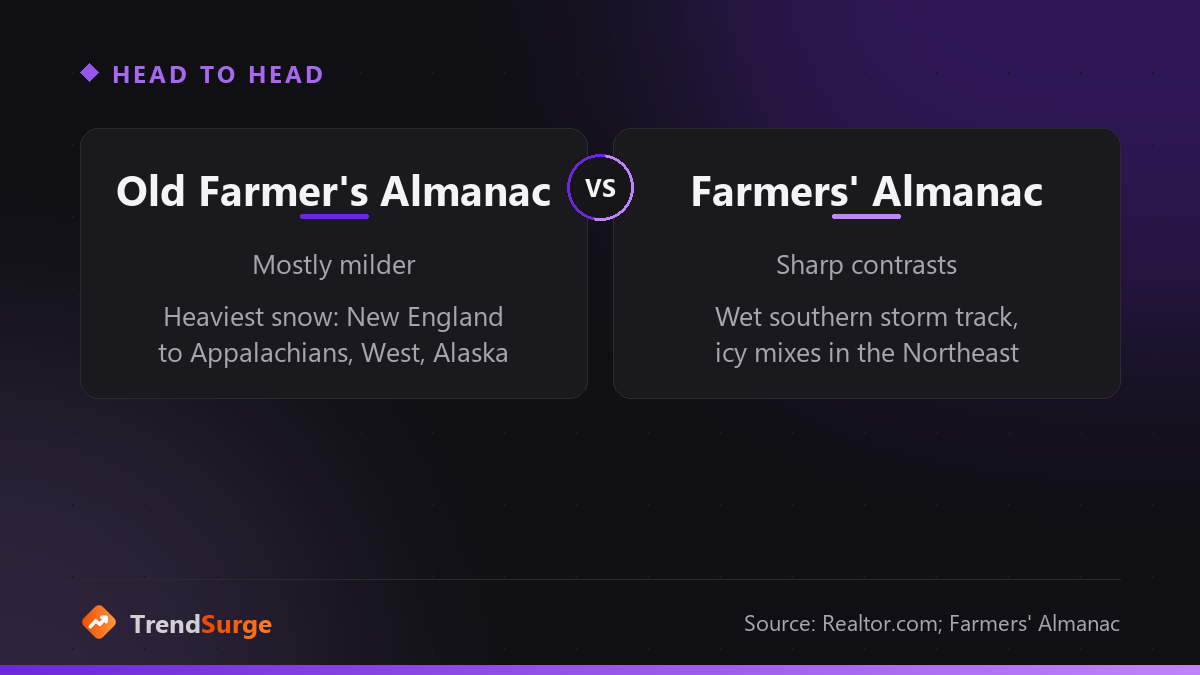
- The Old Farmer's Almanac forecasts a mostly milder winter, with above-normal snowfall from central New England through the Appalachians, the Intermountain region, the Pacific Northwest, and Alaska.
- The most intense prolonged cold runs from central New England south through the Appalachians into the Ohio Valley, hitting hardest from mid-January through late February.
- Along the Atlantic Corridor from Boston to Norfolk, the Almanac calls for a warmer-than-normal winter with snowfall slightly below average.
- A rival publication, the Farmers' Almanac, blames a very different driver — El Niño holding through the season and a wet, stormy southern tier.
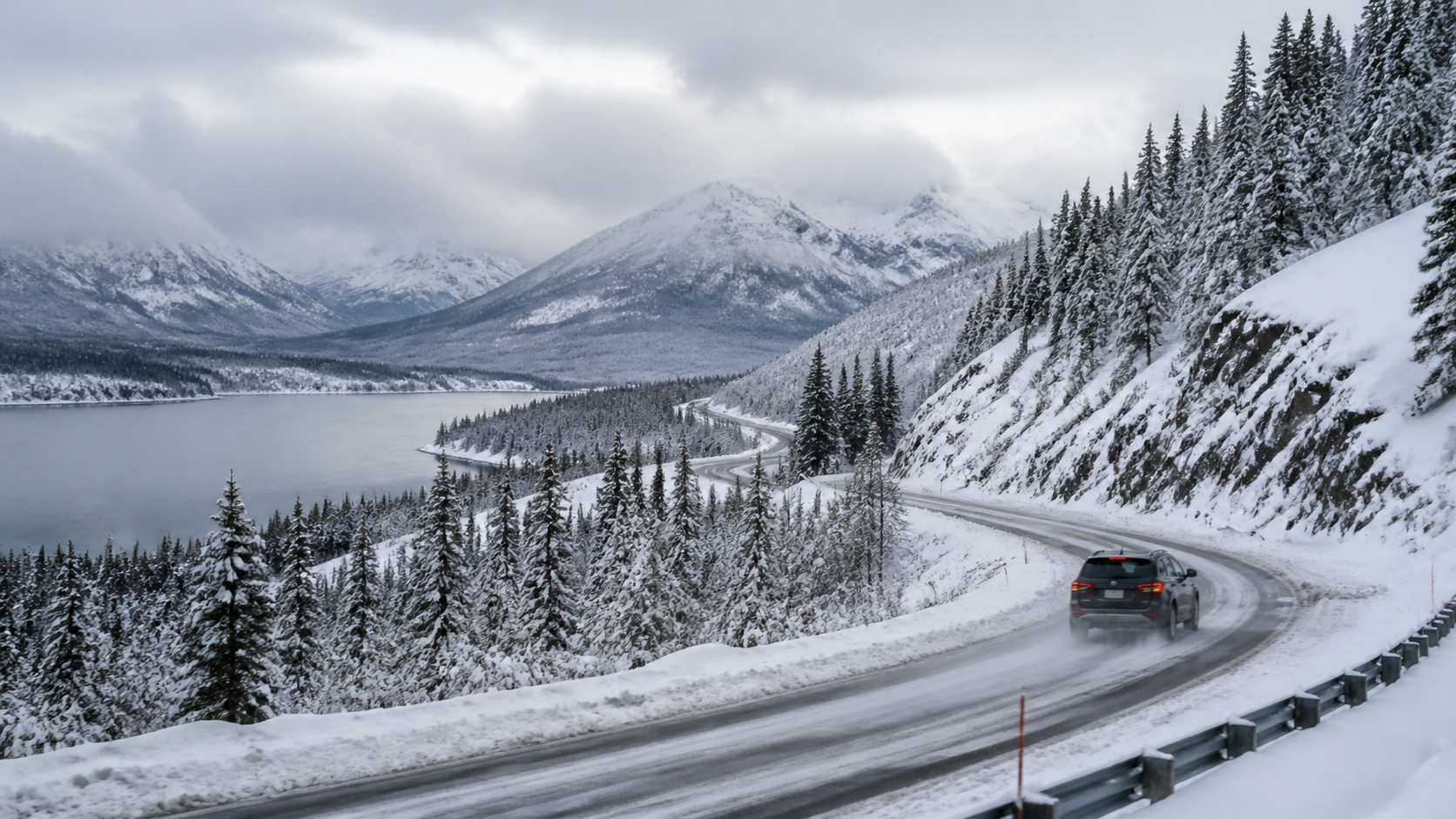
The Old Farmer’s Almanac 2026–2027 winter forecast is out, and for most of the country the headline is relief. The Almanac calls for a mostly milder season nationally, with the punishment concentrated in a handful of zones: the heaviest snow is forecast from central New England through the Appalachians, across the Intermountain region and Pacific Northwest, and into Alaska, according to Realtor.com’s breakdown of the forecast. The most intense prolonged cold runs from central New England south through the Appalachians and into the Ohio Valley.
One complication before you plan anything around it. There are two different almanacs publishing rival long-range winter forecasts right now, and this year they disagree about what is driving the season.
First: you are probably looking at two different almanacs
This trips up nearly everyone every August. The Old Farmer’s Almanac (almanac.com) is the one whose regional map is circulating this week. By its own account it has spent 235 years mixing practical advice with the unexpected, and its 2027 edition carries a complete 12-month long-range forecast. Carol Connare is editor-in-chief.
The Farmers’ Almanac (farmersalmanac.com) is a separate publication with a separate forecast, credited to “Caleb Weatherbee” — a pseudonym the Almanac says has been passed down through generations of its prognosticators to conceal the real forecasters’ identities. It says it has issued winter outlooks since 1818, its founding year, which it calls “the longest-running long-range weather forecast in North America.”
Those claims sit uneasily together: 235 years of publishing would put The Old Farmer’s Almanac well ahead of 1818. Neither addresses the other, so take the “longest-running” branding with a grain of road salt. (The Old Farmer’s Almanac lost its most recognizable figure this year: Judson “Jud” D. Hale Sr., its 12th editor from 1970 to 2000, died at 93.)
Where the snow actually piles up
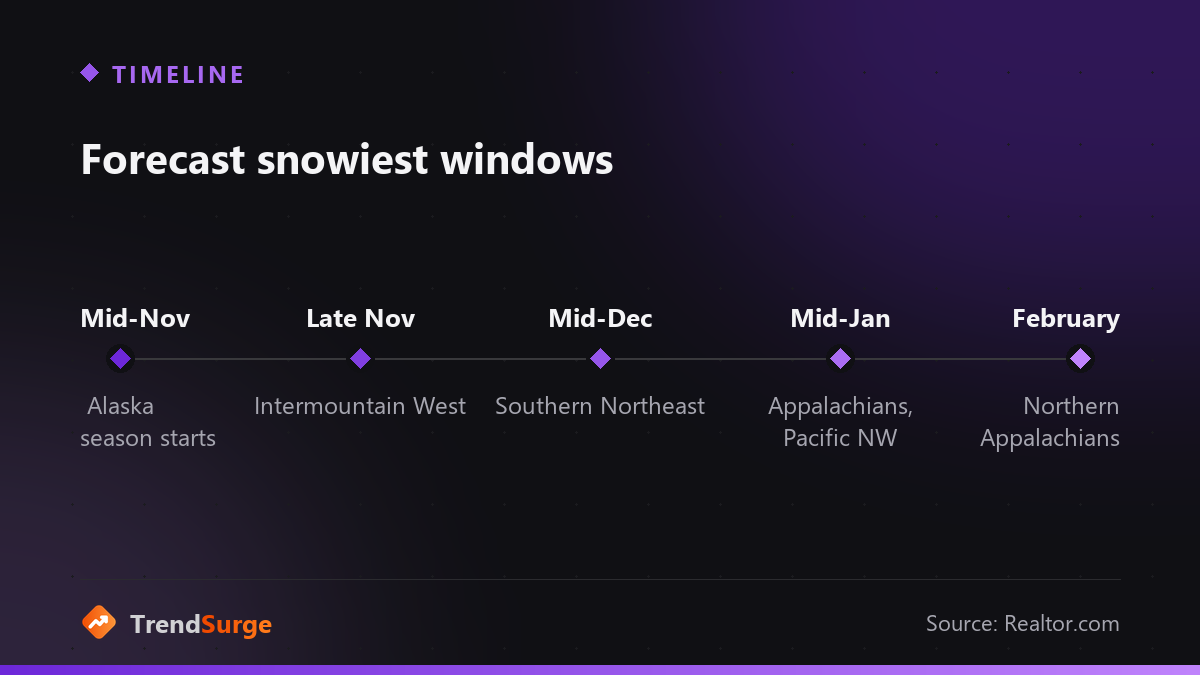
Inside those snow belts, Realtor.com’s read of the Almanac’s map gets specific about timing:
- Southern Northeast: above-normal snowfall concentrated in mid- and late December, mid-January, and early and late March.
- Northern Appalachians: significant accumulation at higher elevations, peaking mid-January and running throughout February.
- Intermountain West: snowiest stretches in late November, late December, and early February.
- Pacific Northwest: heavy snow events in late December, mid-January, and mid-February.
- Alaska: above-average snowfall across an extended season, peaking mid-November, early and late January, mid-February, and late March.
Mountain properties in the Pacific Southwest can also expect robust snowfall after the new year, per Realtor.com. The Almanac attributes some of this activity to a Super El Niño giving way to a more active La Niña season — a transition worth watching if you followed our coverage of the strangely quiet 2026 Atlantic hurricane season, where the same Pacific pattern was the central character.
Where it actually gets cold
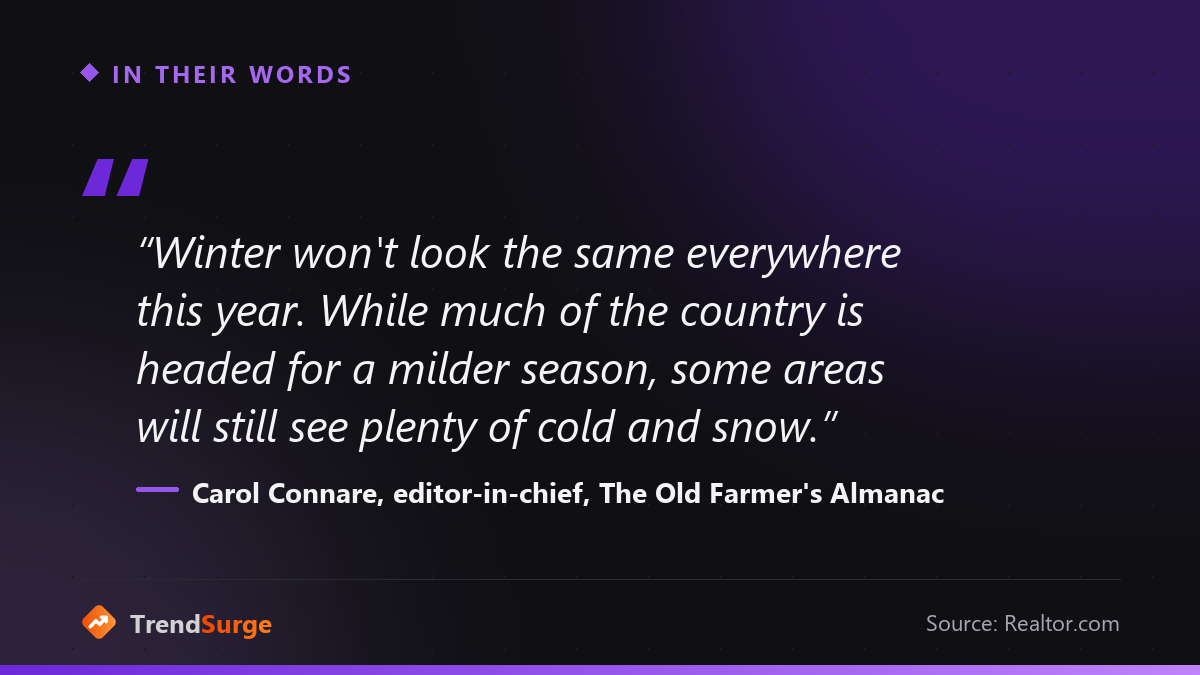
Milder is the national baseline, not a promise. “Winter won’t look the same everywhere this year,” Connare told Realtor.com. “While much of the country is headed for a milder season, some areas will still see plenty of cold and snow.”
The cold core is eastern. The most intense prolonged cold stretches from central New England southward through the Appalachians and into the Ohio Valley. In the southern Northeast and the Appalachians, the sharpest spells hit in mid-January and extend through mid- to late February. Ohio Valley residents get back-to-back freezes in mid- and late January.
Two curveballs: Hawaii is forecast to run below normal all winter. And the regions penciled in as mild — Upper Midwest, Lower Lakes, Deep South, Desert Southwest — still get sharp freeze events, with severe cold in the Upper Midwest in mid-to-late January and extreme chills in the Lower Lakes in early January and early February.
If you live between Boston and Norfolk, exhale
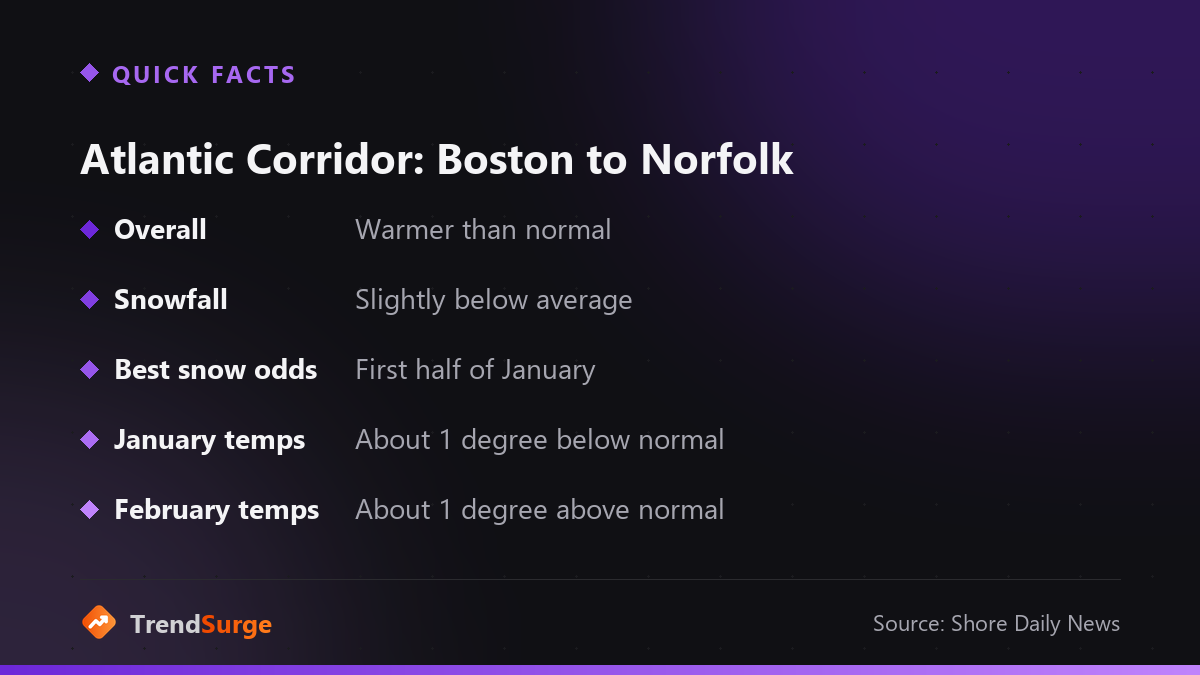
The Almanac’s Atlantic Corridor region — the I-95 spine from Boston to Norfolk — draws one of the gentler outlooks. Shore Daily News reports the Almanac is calling for a warmer-than-normal winter there, with both precipitation and snowfall slightly below average.
The coldest periods land in early to mid-December, early to mid-January, and again in early and late February. Any significant snow is most likely in the first half of January and in early and late February. January averages about one degree below normal; February runs about one degree above. The long view keeps going: March through May all forecast warmer than average, with a wet May running about three inches above normal rainfall.
The other almanac sends the storms south instead
Now the disagreement. The Farmers’ Almanac frames winter 2026–2027 as “a season of sharp contrasts, with an active southern storm track, quick bursts of snow and bitter cold across the North, and a tricky mix of rain, sleet, ice, and heavy wet snow in the Northeast.”
Crucially, its driver is the opposite one. The Farmers’ Almanac says El Niño is “expected to remain an important influence through the heart of the season,” favoring wetter-than-normal conditions across much of the southern United States — not a handoff to La Niña. It puts an active storm track running from Southern California and the Desert Southwest through Texas, the Gulf Coast, and the Southeast, with the southern Rockies doing especially well for mountain snow.
The regional splits contradict each other in at least two places. The Farmers’ Almanac calls the Pacific Northwest “a more changeable and somewhat less dependable snow season”; the Old Farmer’s Almanac puts it in the above-normal snowfall bucket. The Farmers’ Almanac has the West, northern Plains, Upper Midwest, and Great Lakes near normal on temperature with fast-moving clippers; the Old Farmer’s Almanac lists the Upper Midwest among its milder, above-normal regions.
Where they roughly agree: the Northeast is a mess. The Farmers’ Almanac expects coastal areas to get more rain or mixed precipitation while inland areas take several rounds of heavy, wet snow, particularly in January and February, with temperatures near freezing often enough that precipitation type will be genuinely hard to call.
So how accurate is any of this?
Neither formula is public. The Farmers’ Almanac describes its method as sunspot cycles, lunar position, tidal pull, and historical pattern weighting — first developed by founding editor David Young — with satellite observations, computer modeling, and ocean-atmosphere analysis layered on to enhance the traditional calculation rather than replace it.
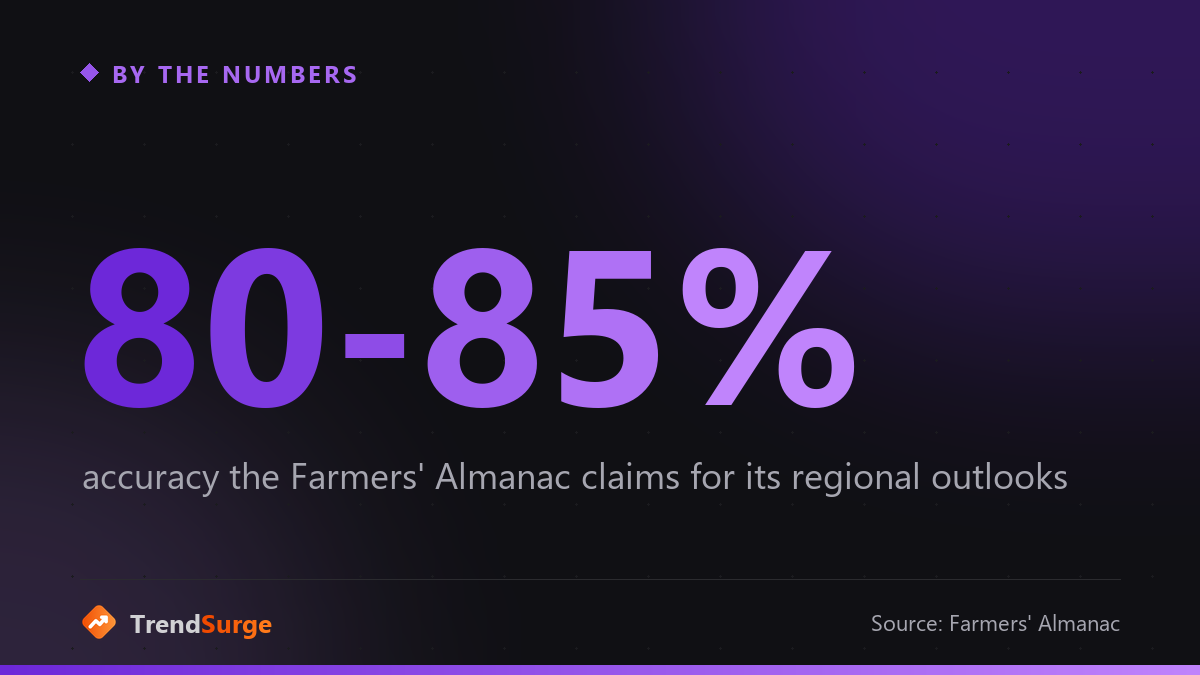
On accuracy it is unusually candid in its own FAQ: it reports 80-85% accuracy on regional outlooks, then adds that independent reviews put actual accuracy somewhat lower, though still meaningfully above chance. It does not name those reviews.
The other caveat comes from the Old Farmer’s Almanac, via Shore Daily News: its long-range forecasts show broad weather trends, not specific storms or individual days. “Significant snow in the first half of January” is not telling you when to move your car.
What happens next
Between now and December, the practical move is prep, not prediction. For the snow-heavy zones, Realtor.com flags clearing heavy snow load from roofs, watching for destructive ice dams, and making sure foundation drainage works during sudden thaws. For the eastern cold belt, the list is insulating unheated basements, wrapping exposed plumbing, and scheduling a furnace inspection before January, when the sharpest freezes are forecast — all cheaper in September than mid-cold-snap, the same logic behind getting your flu shot on the right schedule rather than in the middle of a surge.
The bigger thing to watch is the El Niño question. If the Super El Niño hands off to a more active La Niña the way the Old Farmer’s Almanac expects, the southern storm track the Farmers’ Almanac is banking on weakens. If El Niño holds, the south stays wet and the north stays quiet. Either way, by the time the first real Arctic outbreak lands, one of these two almanacs will look a lot smarter than the other.
For now they sit where they always do — on the shelf right after the last long weekend of summer, with the print edition published each August.
Quick poll
Which winter forecast are you actually planning around?
For the record: the Farmers' Almanac claims 80-85% accuracy on regional outlooks, and notes in the same FAQ that independent reviews put the real figure lower.
FAQ
What does the Old Farmer’s Almanac predict for winter 2026-2027? Mostly milder than normal nationally, with above-normal snowfall from central New England through the Appalachians, across the Intermountain region and Pacific Northwest, and into Alaska, per Realtor.com. The coldest stretch runs from central New England south into the Ohio Valley.
Where will it snow the most this winter? The snowiest zones are the northern Appalachians at higher elevations (mid-January through February), the Intermountain West (late November, late December, early February), the Pacific Northwest (late December, mid-January, mid-February), and Alaska (mid-November through late March).
Is the Old Farmer’s Almanac the same as the Farmers’ Almanac? No — separate publications, separate forecasts. The Old Farmer’s Almanac is edited by Carol Connare and says it has published for 235 years; the Farmers’ Almanac credits its forecast to the pseudonymous “Caleb Weatherbee” and dates its outlooks to 1818.
How accurate is the Almanac’s winter forecast? The Farmers’ Almanac claims 80-85% accuracy on its regional outlooks while acknowledging independent reviews put the real number lower, if still above chance. Both stress the forecasts describe broad seasonal trends, not specific storms or dates.