Key Takeaways
- Four named storms, zero hurricanes: accumulated cyclone energy is running 84 percent below the 1991–2020 average, per Moody's.
- Tropical Storm Dolly is forecast to weaken into a tropical wave before reaching the Leeward Islands, and no coastal watches or warnings are up.
- Rain is the real risk — the NHC warns of possible flash flooding in the Leewards, Puerto Rico, the U.S. Virgin Islands and Hispaniola through Monday.
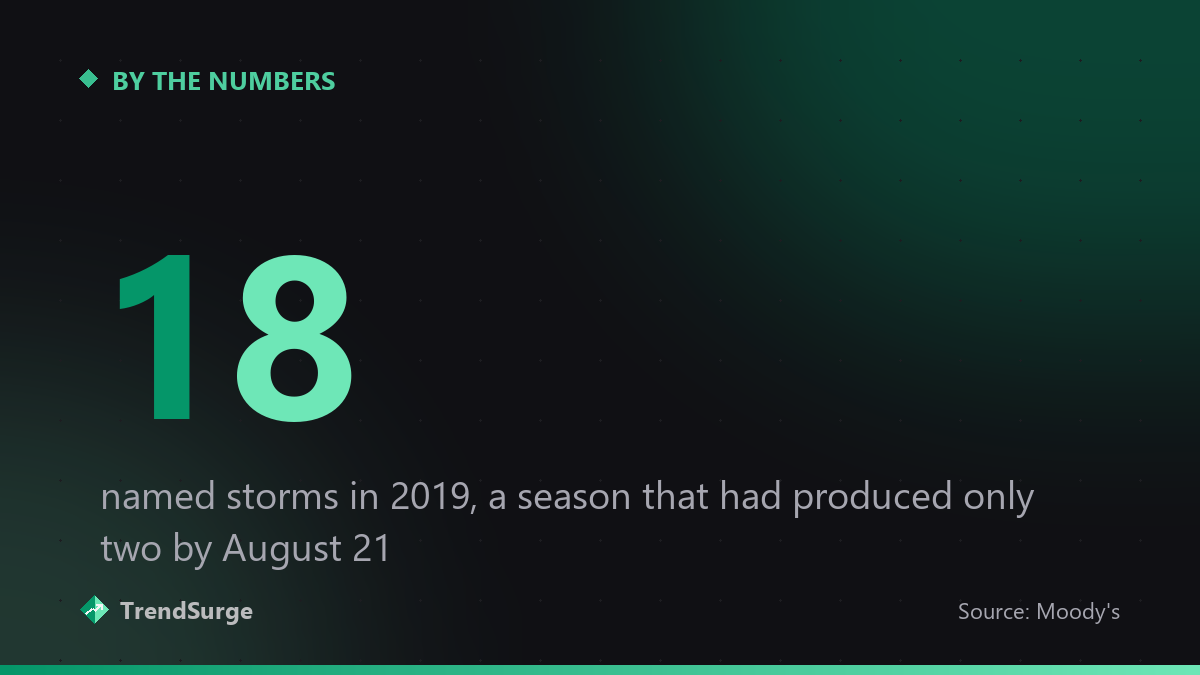
- NOAA gives the season a 75 percent chance of finishing below normal, but 2019 had just two named storms by August 21 and ended with 18.

The 2026 Atlantic hurricane season is approaching its traditional peak — the second week of September — with a statistic that would have seemed unthinkable a few years ago: zero hurricanes. Just four named storms have formed, all weak, and the newest one, Tropical Storm Dolly, is expected to fall apart before it even reaches the Caribbean. A strengthening El Niño is smothering the Atlantic, and NOAA now gives the season a 75 percent chance of finishing below normal, per Moody’s analysis of the August forecasts. Here’s where Dolly is headed, why the season has been so quiet, and the reasons forecasters say you shouldn’t relax yet.
Tropical Storm Dolly: weak, fast, and rain-heavy
Dolly formed Thursday, August 27 in the eastern Atlantic as the season’s fourth named storm, per the Savannah Morning News. As of Friday morning it was centered about 1,145 miles east of the Leeward Islands with maximum sustained winds of 40 mph, racing west at 24 mph, according to the National Hurricane Center via the Bergen Record.
The forecast is unusually unthreatening. The NHC expects little strengthening and projects weakening as the storm approaches the Caribbean; Fox Weather forecasters, cited by the Bergen Record, expect Dolly to “degenerate into a tropical wave before it reaches the Leeward Islands,” beaten down by wind shear, dry air, and Saharan dust. There are no coastal watches or warnings.
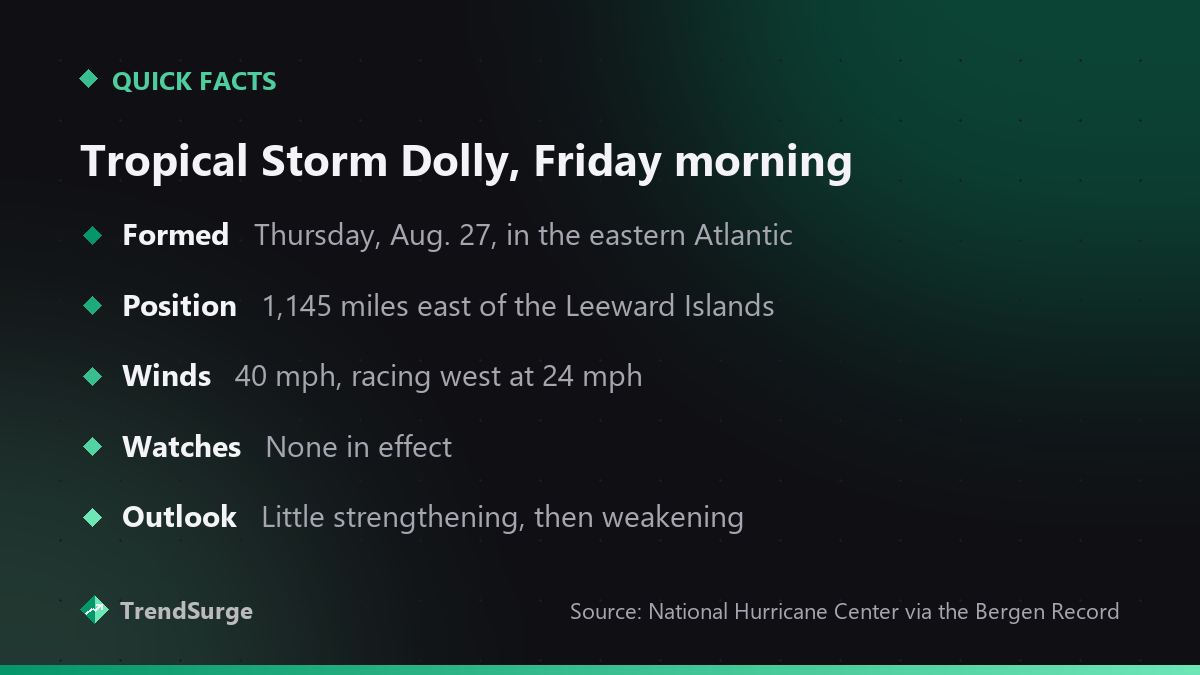
The real concern is rain. Heavy rainfall from Dolly or its remnants could reach the Leeward Islands late Saturday into Sunday, then Puerto Rico, the U.S. Virgin Islands, and Hispaniola Sunday into Monday, with the NHC warning of possible flash flooding “especially in areas of higher terrain,” per the Bergen Record.
One wrinkle to watch: the Savannah Morning News reports some computer models suggest the system’s remnants could try to redevelop late next week near the Bahamas — too early to call, and no current indication of a threat to the Southeast.
(The storm’s name has carried extra emotional weight: it entered the rotation shortly after Dolly Parton’s death, prompting some meteorologists to call for the name’s retirement, per the Savannah Morning News. The World Meteorological Organization sets Atlantic name lists years in advance on a six-year cycle, so “Dolly” was simply next up.)
Just how quiet has 2026 been?
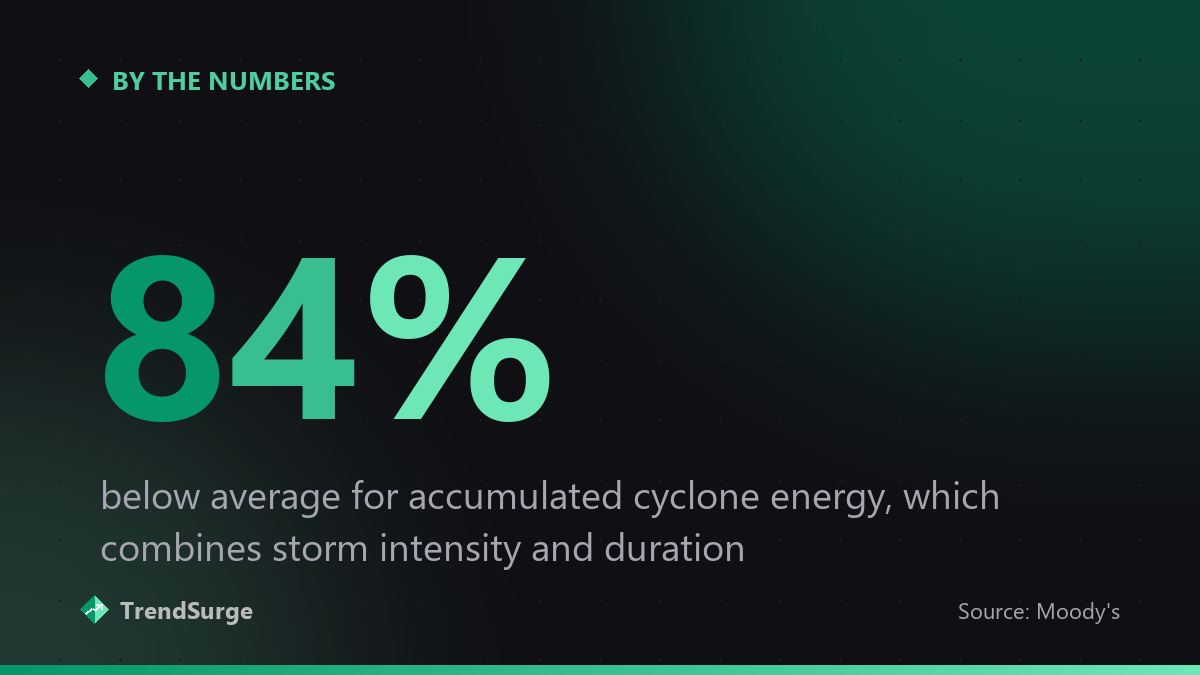
Moody’s runs the numbers, and they’re striking. Through August 21, the season had produced three named storms — Arthur, Bertha, and Cristobal — all short-lived tropical storms, with no hurricanes. That’s roughly half the storm count of the 2016–2025 average for this date. The more telling measure is accumulated cyclone energy (ACE), which combines storm intensity and duration: it’s running 84 percent below the 1991–2020 average.
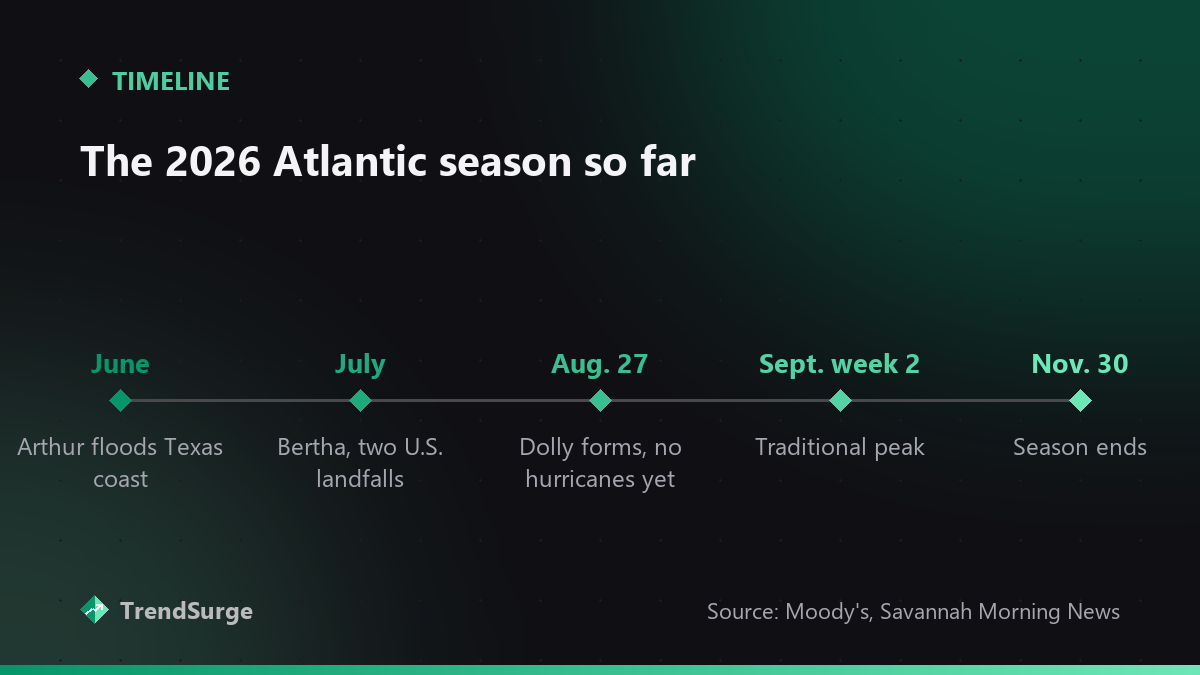
The storms that did form were modest but not harmless, per Moody’s: Arthur made landfall southwest of Galveston in June and caused significant flash flooding across Texas and the Gulf Coast, plus EF-1 tornadoes in Louisiana; Bertha made two U.S. landfalls in July along the Louisiana and Texas coasts with flooding and minor storm surge; Cristobal died at sea in a day.
The El Niño effect, explained
The dominant force is El Niño — now fully established in both the Pacific Ocean and atmosphere, with NOAA giving a 100 percent probability it persists through the hurricane season’s peak months, per Moody’s. El Niño typically increases wind shear over the Atlantic and promotes sinking, dry air — conditions that tear developing storms apart, as the Savannah Morning News notes is already happening to Dolly.
That’s why every major August forecast update points the same direction, per Moody’s:
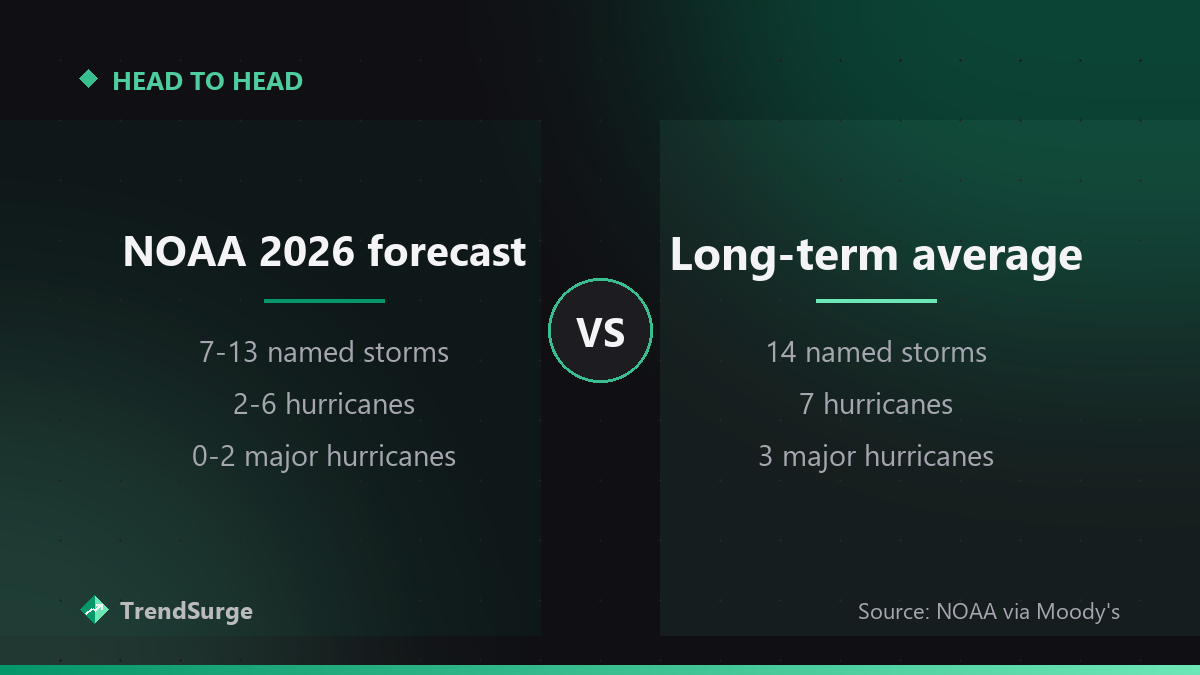
- NOAA: 75 percent chance of a below-normal season; 7–13 named storms, 2–6 hurricanes, 0–2 major hurricanes (against long-term averages of 14, 7, and 3).
- Colorado State University: closely mirrors NOAA.
- Tropical Storm Risk: lowered to 10 named storms, 4 hurricanes, 1 major.
- ECMWF: roughly 6–12 additional named storms, 3–7 becoming hurricanes.
Why forecasters still won’t say “all clear”
Two reasons. First, a quiet start predicts very little. Moody’s points to 2019, when only two named storms had formed by August 21 — and the season finished with 18. The bulk of Atlantic activity happens between August and October, and one favorable stretch can produce a burst of storms.
Second, it only takes one. Even in a below-normal season, NOAA’s forecast allows for up to two major hurricanes — and a single landfalling major hurricane defines a season regardless of the totals around it. The Savannah Morning News puts the practical takeaway plainly: as the peak approaches, coastal residents should keep monitoring forecasts and have a hurricane plan ready, quiet season or not.
What happens next
The immediate watch items: Dolly’s rainfall moving across the northeastern Caribbean this weekend into early next week, and whether its remnants attempt a comeback near the Bahamas. Beyond that, the season’s defining question plays out over the next six weeks — does the established El Niño hold activity down through the September peak, or does the Atlantic produce a late burst like 2019? The forecast consensus says the former, which would make 2026 a historically familiar but, by recent standards, unusually calm year. Either way, the season officially runs through November 30, and the peak is only now arriving.
The peak also arrives just after Labor Day weekend, one of the year’s busiest travel stretches — our Labor Day 2026 guide covers what’s open and closed on September 7 — and while you’re handling fall housekeeping, our flu shot timing guide explains why October is the window.
Quick poll
Is your hurricane plan ready for the peak?
The Savannah Morning News's advice as the peak approaches: keep monitoring forecasts and have a hurricane plan ready, quiet season or not.
FAQ
Have there been any hurricanes in 2026? Not yet. Through late August, the Atlantic has produced only four named tropical storms — Arthur, Bertha, Cristobal, and Dolly — with no hurricanes, per Moody’s and the Savannah Morning News.
Will Tropical Storm Dolly hit the United States? It’s not expected to. Forecasters project Dolly will weaken into a tropical wave before reaching the Leeward Islands, though its rain could affect Puerto Rico and the Virgin Islands early next week. Some models hint at possible redevelopment near the Bahamas — worth watching, but far from certain.
Why is the 2026 hurricane season so quiet? A strong El Niño is producing wind shear and dry, sinking air over the Atlantic — conditions hostile to storm formation. NOAA gives El Niño a 100 percent chance of persisting through the season’s peak.
When is the peak of hurricane season? Around the second week of September, with most activity historically between August and October. The season runs through November 30.