Key Takeaways
- NIST lists November 1, 2026, at 2 a.m. local time as the return to standard time.
- At the change, 2 a.m. becomes 1 a.m.; the hour from 1 to 2 occurs twice.
- Most of Arizona stays on standard time, but Navajo territories observe daylight saving time.
- Automatic time depends on correct device settings and current software, not just having a network connection.

Daylight saving time ends in most of the United States on Sunday, November 1, 2026, at 2 a.m. local time. Clocks move back to 1 a.m., repeating that hour. Hawaii, most of Arizona, and several US territories do not make the change.
For a household calendar, the main task is to identify which clocks adjust automatically and which need attention. For a late-night trip or a meeting across regions, the trickier task is to identify the time zone and which occurrence of the repeated hour an appointment means.
Hero: R. Eskalis/NIST, researchers working on NIST-F4 in a 2025 photograph. Atomic timekeeping is separate from daylight-saving policy. Source · NIST reuse policy. Cropped and JPEG-optimized.
The transition happens at local time
NIST’s current rules page explicitly gives the 2026 dates: daylight saving time began March 8 and ends November 1. The general rule is the second Sunday in March for the spring change and the first Sunday in November for the fall change.
The fall transition is 2 a.m. in the place making the change. It is not one simultaneous 2 a.m. event across every US time zone. A clock in the Eastern zone reaches its local transition before a clock in the Pacific zone reaches its own.
The everyday instruction is simple: move a manually set clock back one hour. Some people do that before going to bed and others the next morning. Many phones and computer clocks adjust automatically, as NIST’s local-time FAQ notes.
The underlying daylight has not increased. The change shifts an hour of daylight from the evening side of the clock toward the morning. “An extra hour” describes the repeated civil-time hour that night, not a longer astronomical day or an extra hour of sunlight.
Which places do not fall back?
NIST identifies Hawaii, American Samoa, Guam, Puerto Rico, the Virgin Islands, and most of Arizona as places that do not observe daylight saving time. Their clocks therefore do not make the November transition under those rules.
Arizona needs an extra qualification: Navajo territories do observe daylight saving time. “Arizona never changes clocks” is too broad for travel planning. Use the location’s actual time zone and local instructions rather than a state-level shorthand when the distinction matters.
The lack of a local clock change does not mean the time difference with every other place stays constant. When an observing region falls back and a non-observing region stays put, their relative clock difference changes. That is why a standing call with someone in another region deserves a calendar check.
International arrangements add another layer. NIST explains that countries choose their own rules and can change clocks on different dates. A US date is not a reliable guide for a contact abroad, even when both places use a form of daylight saving time.
Why 1:30 a.m. can mean two different moments
On the transition night, a clock reaches the end of the daylight-time hour, returns to 1 a.m. standard time, and runs through that hour again. Consequently, 1:30 a.m. occurs once before the change and once after it.
For a daytime family event, that may have no practical effect. For a pickup, shift, overnight reservation, or technical log during that hour, a bare time such as “1:30” is incomplete. The date, location, and daylight-versus-standard designation distinguish the two moments.
For example, in the Eastern zone the earlier 1:30 a.m. uses EDT, while the later one uses EST. The difference is one hour. This follows directly from NIST’s description of the repeated hour and its table of UTC offsets.
If someone gives you an ambiguous overnight instruction, ask the organizer or transport provider which occurrence applies. Do not decide by manually adding an hour to an itinerary that may already have accounted for the change.
ET and EST are not interchangeable all year
NIST’s time-zone FAQ distinguishes standard-time and daylight-time abbreviations. It also explains that a broad designation such as Pacific Time, or PT, can mean the local time in effect at that point in the year.
| Zone | During daylight time | During standard time |
|---|---|---|
| Eastern | EDT, UTC−4 | EST, UTC−5 |
| Central | CDT, UTC−5 | CST, UTC−6 |
| Mountain, where DST applies | MDT, UTC−6 | MST, UTC−7 |
| Pacific | PDT, UTC−7 | PST, UTC−8 |
| Alaska, where DST applies | AKDT, UTC−8 | AKST, UTC−9 |
The table is useful when reading a schedule that explicitly says EST or PST. Those labels specify standard time; ET and PT are broader labels that follow the region’s local seasonal clock.
For a recurring meeting, using the intended city or time zone in the calendar is clearer than treating a fixed offset as a permanent substitute. Check the displayed date and local time for the next occurrence, especially when participants live in regions with different changeover rules.
Your device handles local time, not NIST alone
NIST explains that its time services distribute Coordinated Universal Time, or UTC. The computer’s operating system supplies the local time-zone and daylight-saving corrections. A correct time signal and an incorrect local setting can therefore produce a wrong displayed hour.
Before the change, check that your operating system is current and the device has the intended time zone selected. If it normally adjusts automatically, avoid changing it manually just because another clock in the room has not updated yet. First compare the settings and the kind of clock you are looking at.
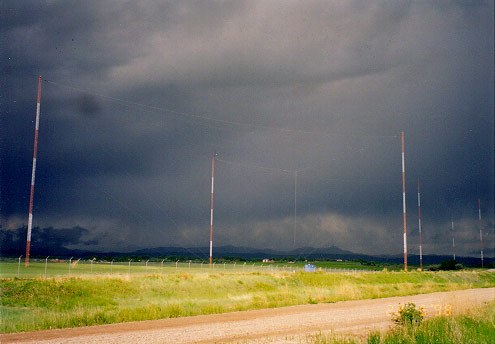
Radio-controlled clocks use a different route. The WWVB station near Fort Collins, Colorado broadcasts time information that includes daylight-saving status. NIST says a compatible clock should implement the change automatically when it receives and uses that information correctly.
An “automatic” clock can still follow an old rule
NIST warns that some clocks have older transition dates programmed into their firmware. Others receive a radio signal but do not use its daylight-saving information correctly. The clock’s label alone does not establish which system it uses.
If a radio-controlled clock is wrong after the change, NIST recommends checking whether it recently synchronized and whether its time-zone setting is correct. In a place that does not observe DST, the clock’s automatic DST function may need to be disabled according to its instructions.
A non-radio clock with a built-in automatic rule may require a manual adjustment or manufacturer guidance. Treat each device according to its manual. A wall clock, car display, appliance timer, phone, and computer do not necessarily share the same source of time or update method.
What happens next
Put November 1 on the calendar and note the manually set clocks you use. Before an important cross-region appointment, check the actual calendar occurrence rather than assuming last week’s time difference will remain unchanged.
The date here reflects NIST’s current 2026 guidance. If you encounter a headline about a proposal to change daylight-saving policy, verify that the applicable rule actually changed before altering your plans. NIST identifies the Department of Transportation, rather than NIST, as the agency overseeing time zones and DST.
Our Labor Day guide handles another recurring US calendar question. For sky events, our September observing guide similarly depends on reading dates and local viewing information carefully.
Quick poll
Which clock usually needs your attention at the time change?
Our take: identify the device's time source before correcting it manually.
FAQ
When do US clocks fall back in 2026?
November 1 at 2 a.m. local time, in regions observing daylight saving time. The clock returns to 1 a.m.
Does all of Arizona skip the change?
No. Most of Arizona does, but Navajo territories observe daylight saving time, according to NIST.
Will my phone change automatically?
Many phones do. Correct software and time-zone settings still matter; check the device’s settings and instructions rather than assuming every clock behaves identically.
Do we gain an hour of daylight?
No. The clock change repeats an hour of local time and shifts daylight toward the morning; it does not add sunlight to the day.