Key Takeaways
- All three flu strains were replaced for 2026–2027 — a full reformulation Your Local Epidemiologist calls "pretty unusual."
- October is the sweet spot for most people, and MUSC's Dr. Stephen Thacker says no later than November.
- The FDA approved Moderna's mFLUSIVA, the first mRNA flu vaccine, for adults 50 and older; Thacker cites a trial finding it 26% more effective for that age range.
- Flu, RSV and COVID vaccines are free this fall, per Your Local Epidemiologist — though there will be no federal campaign promoting them.
The short answer to “when should I get my flu shot”: October, for most people. Epidemiologist Katelyn Jetelina’s Your Local Epidemiologist newsletter notes protection wanes through the season, making October the sweet spot, and Dr. Stephen Thacker, a pediatric infectious disease specialist at MUSC Health, recommends mid-to-late October and “no later than November.” The shots are already in pharmacies — CVS announced nationwide availability on August 27 — and this year’s vaccine is unusual in two ways: all three flu strains in it were replaced, and for the first time ever, there’s an FDA-approved mRNA flu vaccine for older adults. Here’s the full picture for the 2026–27 season.
This year’s shot is a genuinely new vaccine
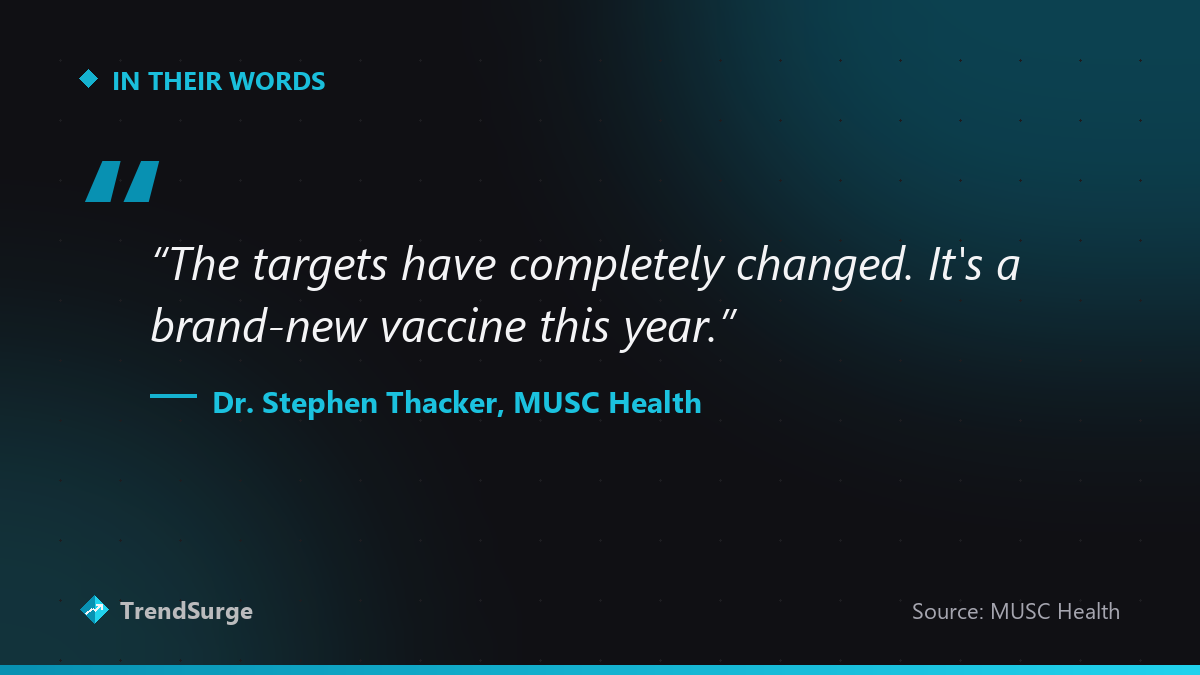
Most years, the flu vaccine formula carries over some components. Not this time. All three strains were updated for 2026–2027, which Your Local Epidemiologist calls “pretty unusual” — and which should mean good protection if the strain selection holds up. Thacker puts it more bluntly: “The targets have completely changed. It’s a brand-new vaccine this year. This is why it is important to get the vaccine annually.”
On average, flu vaccines reduce the risk of a flu-related doctor visit by 30 to 60 percent, per Your Local Epidemiologist — and Thacker notes that even when a vaccinated person catches the flu, the shot can reduce symptom severity. One myth he dispatches directly: “You cannot get the flu from the vaccine.”
When exactly to get it
The consensus across sources:
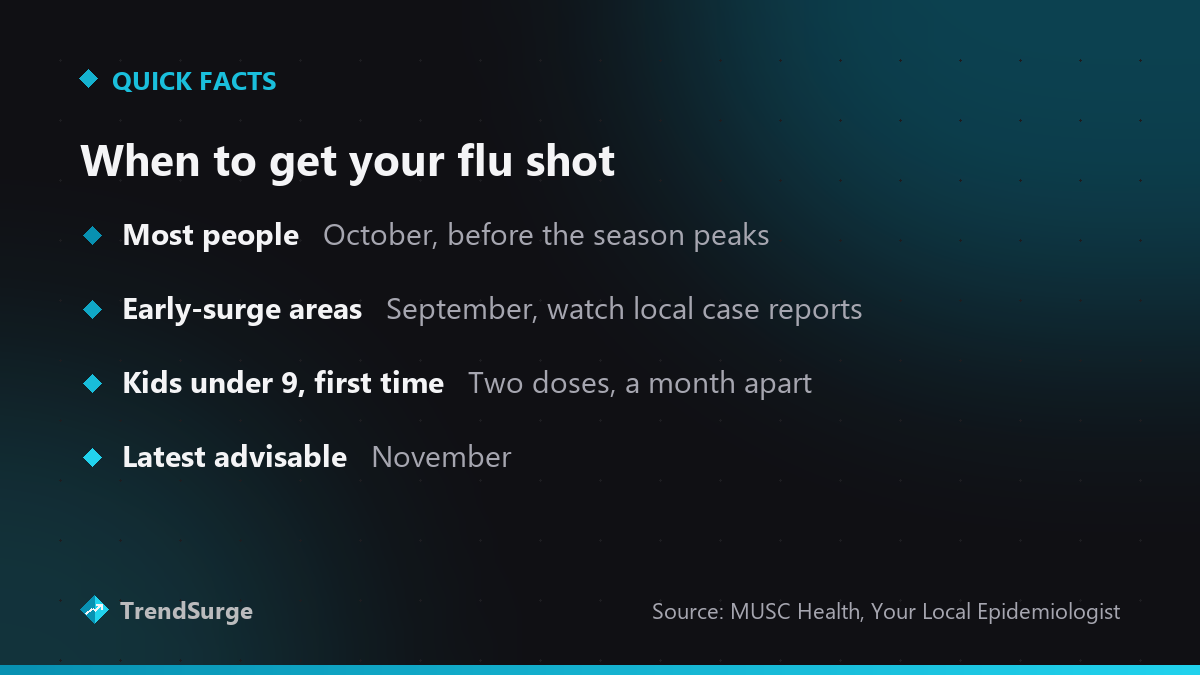
- Most people: October. Getting vaccinated too early means protection may fade before the season peaks; the CDC has generally called September and October the ideal window, per CVS Health.
- Regional caveat: Thacker notes some parts of the country see earlier flu surges and may warrant a September shot — “look for local and state messaging about increasing flu cases.”
- Kids under 9 getting their first flu vaccination: two doses, a month apart, per Your Local Epidemiologist — so start earlier to fit both in.
- The realistic deadline: November, per Thacker, though any time during the season beats skipping it.
CVS’s consumer survey suggests most Americans are on roughly this schedule: 63 percent say they’re likely to get a flu shot this season, and 68 percent of those plan to do it by the end of October.
The big news: the first mRNA flu vaccine
The FDA has approved Moderna’s mFLUSIVA, the first influenza vaccine built on messenger RNA technology, for adults 50 and older this season, per Chemical & Engineering News. It works the way mRNA COVID vaccines do — delivering instructions for a viral protein that trains the immune system — and can be developed and produced faster than traditional flu vaccines, which the Infectious Diseases Society of America says enables quicker responses to mutating strains.
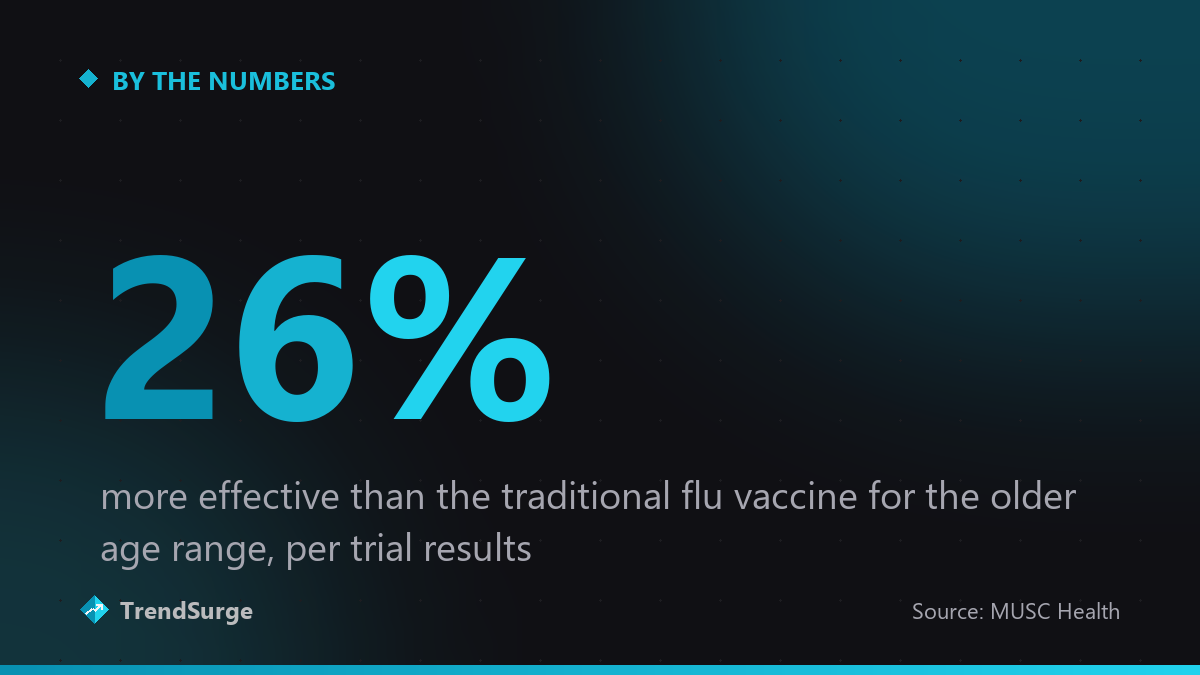
Does it work better? Thacker cites the key trial result: it was “26% more effective than the traditional flu vaccine” for the older age range, and he says he’d recommend it for older individuals “if it is available” — flagging possible supply constraints because of vaccine ordering timelines. Your Local Epidemiologist adds a caveat: the mRNA shot “may be more effective, but has more side effects.”
There’s an unusual policy wrinkle around the approval, per C&EN: the CDC advisory committee (ACIP) that normally issues use recommendations — which trigger mandatory insurance coverage — has been blocked by a federal judge from meeting over disputes about how its members were appointed. That means doctors are leaning on guidance outside the CDC, and insurers have more leeway on coverage. The approval also came exactly one year after the Department of Health and Human Services stopped funding mRNA vaccine research at its BARDA agency, with HHS Secretary Robert F. Kennedy Jr. saying the department is “moving beyond the limitations of mRNA.”
Which version should you get?
Your Local Epidemiologist’s bottom line is reassuring: “The best vaccine is the one you receive,” and shopping around gains you little. The nuances, per YLE and MUSC:
- Kids: The FluMist nasal spray may be slightly more effective for children and can now be taken at home. Thacker notes some parents prefer it to reduce needle anxiety — but it’s not recommended for high-risk individuals.
- Adults 65+ (and some 50+): The adjuvanted shot (Fluad) may offer stronger protection, per a study YLE cites, and the new mRNA option is aimed at this group.
- Everyone else: Any of the standard shots. All five manufacturers’ versions cover the same three strains.
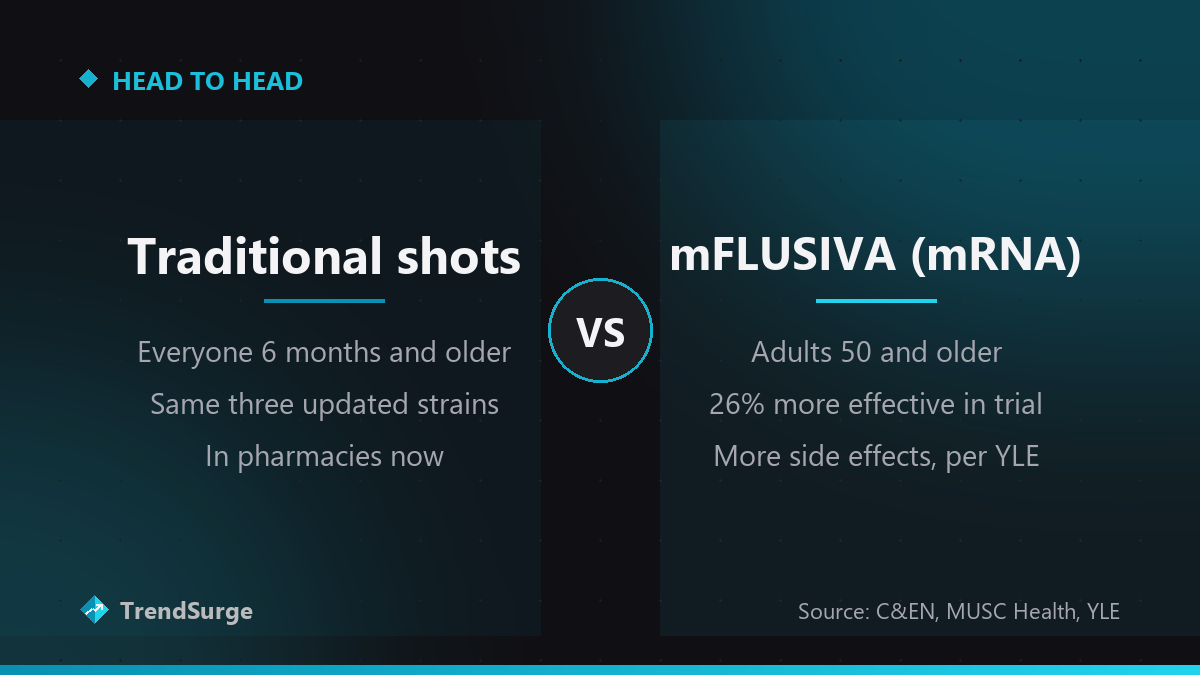
Respiratory vaccines — flu, RSV, and COVID — will be available at no cost this fall, per Your Local Epidemiologist, though it notes there will be no federal fall vaccination campaign promoting them, which is why the season has felt quiet.
Why doctors are worried this year
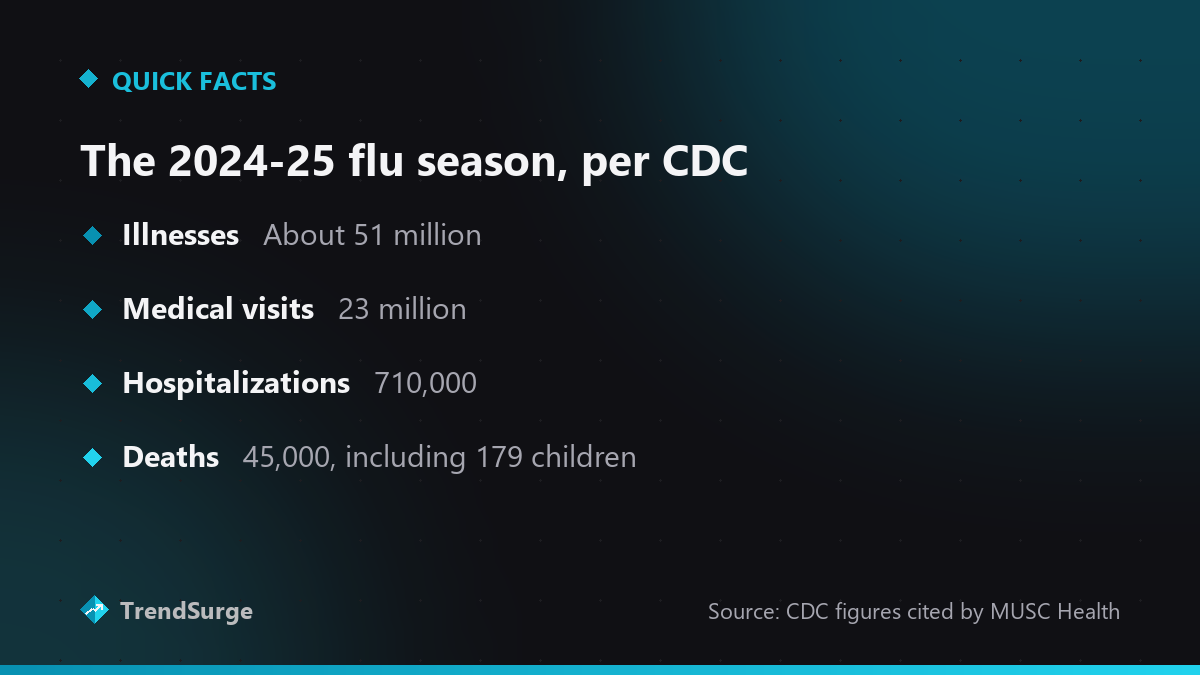
Vaccination rates are sliding. “We were under 50% protection last year, and that was the lowest it has been in many years,” Thacker says, adding that access isn’t the problem — choice is. The stakes, per CDC figures he cites from the 2024–25 season, which was rated high severity: roughly 51 million flu illnesses, 23 million medical visits, 710,000 hospitalizations, and 45,000 deaths — including 179 children.
His practical advice beyond the shot: wash your hands (especially before eating or touching your face), stay home from school or work if you think you have the flu, and see a doctor for a proper diagnosis.
What happens next
Flu shots are available now at pharmacies nationwide — CVS locations offer walk-ins and online scheduling, including combination flu/COVID testing at participating stores, per CVS Health. Formal recommendations for the fall COVID vaccine are expected in early September, per Your Local Epidemiologist, and any updated CDC flu guidance would land around the same time — though Thacker expects the core recommendations (everyone 6 months and older, with high-risk groups prioritized) to hold. If you’re 50 or older and interested in the mRNA option, ask your pharmacy about mFLUSIVA availability early, before supplies settle. Then circle a date in October.
While you’re mapping out the fall: our Labor Day 2026 guide covers what’s open and closed on September 7, and our 2026 hurricane season tracker explains why the Atlantic’s peak weeks are arriving unusually quiet.
Quick poll
When are you planning to get your flu shot?
For reference: the experts quoted here converge on October, and CVS's survey found 68 percent of people planning a shot want it done by the end of the month.
FAQ
When is the best time to get a flu shot in 2026? October for most people — protection wanes over the season, so timing it ahead of the winter peak matters. Experts say no later than November, and September may make sense in regions with early flu activity.
What’s different about the 2026-27 flu vaccine? All three strains in the vaccine were replaced this year — an unusual full reformulation. There’s also a first-ever mRNA flu vaccine, Moderna’s mFLUSIVA, approved for adults 50 and older.
Is the new mRNA flu shot better? In trials cited by MUSC’s Dr. Stephen Thacker, it was 26 percent more effective than traditional shots for older adults, though it may carry more side effects, per Your Local Epidemiologist. Availability may be limited this first season.
Who should get a flu shot? The CDC recommends annual vaccination for nearly everyone 6 months and older, per CVS Health — with special urgency for children under 5, adults over 65, pregnant women, and people with chronic conditions, per MUSC.
Are flu shots free? Respiratory vaccines including flu will be available at no cost this fall, per Your Local Epidemiologist. Most pharmacies, including CVS, offer them with or without appointments.