Key Takeaways
- On September 8, the Moon occults Jupiter for parts of the United States, Canada, Greenland and the North Pacific.
- On September 14, the Moon occults Venus for observers across parts of Europe, Africa and Asia.
- Venus reaches its brightest evening appearance of 2026 late in the month.
- September 26 brings Neptune at opposition and the Harvest Moon, with exact dates varying slightly by time zone.
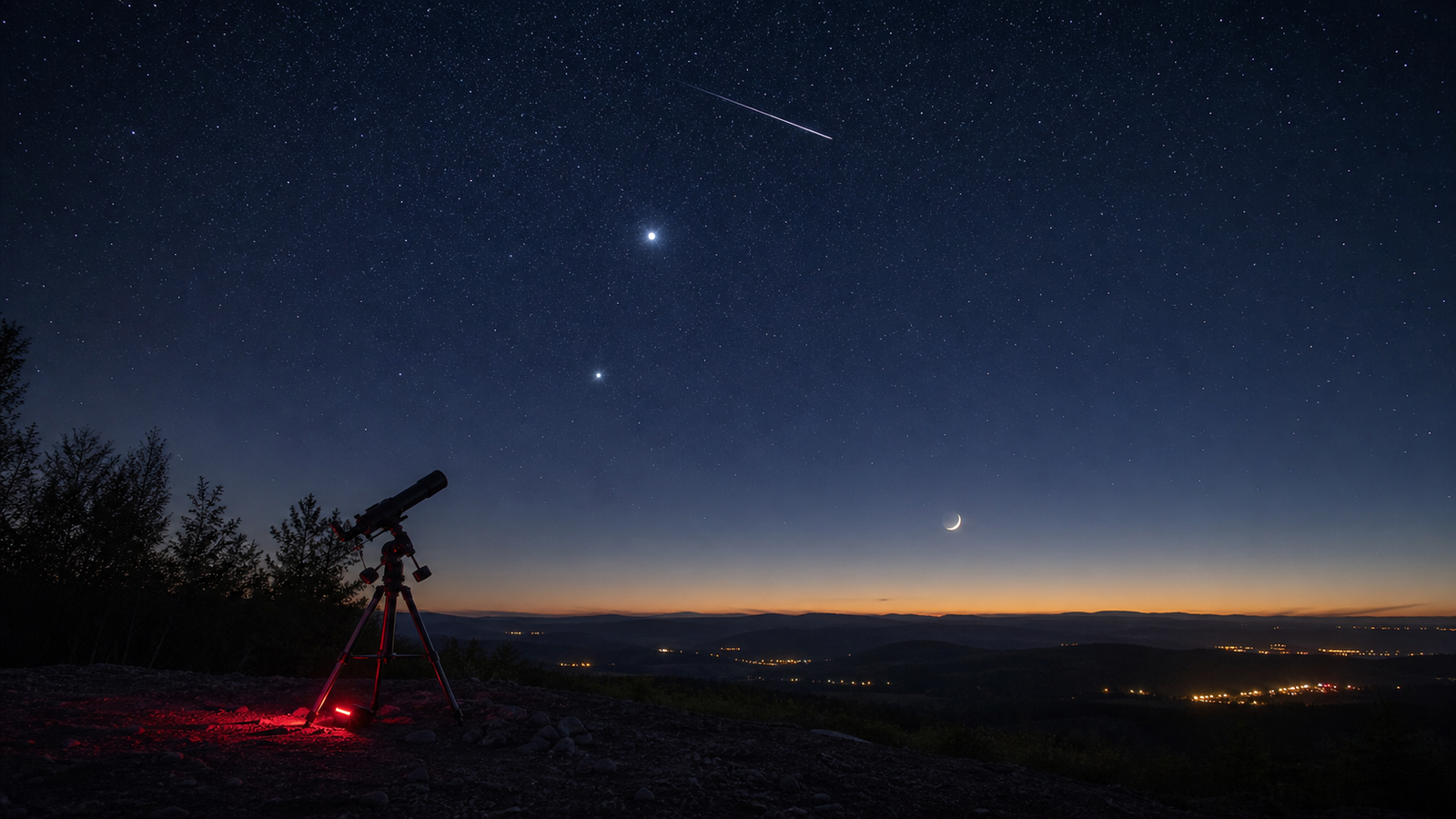
September 2026 gives casual skywatchers several events that do not require a large telescope: Venus beside Spica, the Moon covering Jupiter for some North American observers, an exceptionally bright evening Venus and the Harvest Moon. The month also brings Neptune to opposition and longer northern nights after the autumn equinox.
An occultation is simply one object passing in front of another from the observer’s line of sight. The planets do not switch off. The Moon’s much closer disk briefly covers them. Visibility depends heavily on location and local time, so a global date should always be checked against a city-specific chart before planning a trip.
Start with Venus and Spica
On September 2, Venus appears less than two degrees from Spica shortly after sunset, according to Space.com’s monthly calendar. Look low toward the southwestern horizon. Venus will be the unmistakably bright point; Spica is the nearby blue-white star.
The pair is visible without optical aid if the horizon is clear. A smartphone can capture both, but automatic exposure may turn Venus into a large white blob. Lowering exposure preserves the star and the surrounding color of twilight.
Never sweep binoculars or a telescope near the Sun before it has fully set. The risk is eye damage, not merely a bad view. Low western targets tempt observers to begin too early, so wait until the Sun is safely below the horizon.
This encounter is a useful warmup for late September, when Venus reaches about magnitude -4.8 in the evening sky. Magnitude runs backward: more negative means brighter. Venus will be obvious even from many light-polluted locations.
September 8: the Moon covers Jupiter
Star Walk identifies the lunar occultation of Jupiter as one of the month’s best events and the first such Jupiter occultation since May 2023. The visibility path includes portions of Canada, Greenland, the United States, eastern Russia and the North Pacific.
For some locations the event occurs in daylight. Jupiter can still be observed with appropriate optical help, but daylight planet finding near the Sun requires careful planning. Use a trusted local chart and do not point optics toward the Sun.
Outside the occultation path, observers may see a close Moon-Jupiter approach rather than a disappearance. That is not a failed event; it is the same geometry viewed from a different place on Earth.
Timing can change by minutes across a region because the Moon is nearby enough for parallax to matter. Use an astronomy app, planetarium program or observatory table configured for your coordinates. A generic “September 8” social card is not a local schedule.
September 14: Venus disappears for another part of Earth
Six days later, the Moon occults Venus. The path shifts across portions of Europe, Africa, the Middle East, South and Southeast Asia and western Russia. UK-oriented guidance describes the reappearance as difficult because of daylight and low geometry.
Many U.S. observers will not see the occultation itself. They can still follow Venus through the month as it brightens in the evening. This is a good example of why astronomy headlines need a location clause. “The Moon hides Venus” is true only within the visibility zone.
Photographers who are inside the path should rehearse focus and exposure on a prior evening. The dramatic moment is short, and a bright crescent Moon can dominate the frame. Keep the equipment stable and avoid last-second changes.
The equinox changes the observing window
The Northern Hemisphere autumn equinox arrives on September 23. Day and night are not exactly twelve hours everywhere, but the date marks the seasonal transition and a rapid expansion of darkness for northern observers.
Longer nights make early autumn useful for seeing both summer and winter patterns. The Summer Triangle remains accessible, while Orion rises before dawn later in the month. Pegasus and the Great Square become more prominent in the evening.
The early part of September offers better Milky Way conditions when the Moon is out of the way. A dark location matters more than expensive equipment. Human night vision needs time to adapt, so keep white phone screens dim or use a red light.
Our story about the Roman Space Telescope’s checkout phase looks far beyond what a backyard observer can see, but the same principle applies: observation quality begins with knowing the instrument, timing and target.
September 26: Neptune and the Harvest Moon
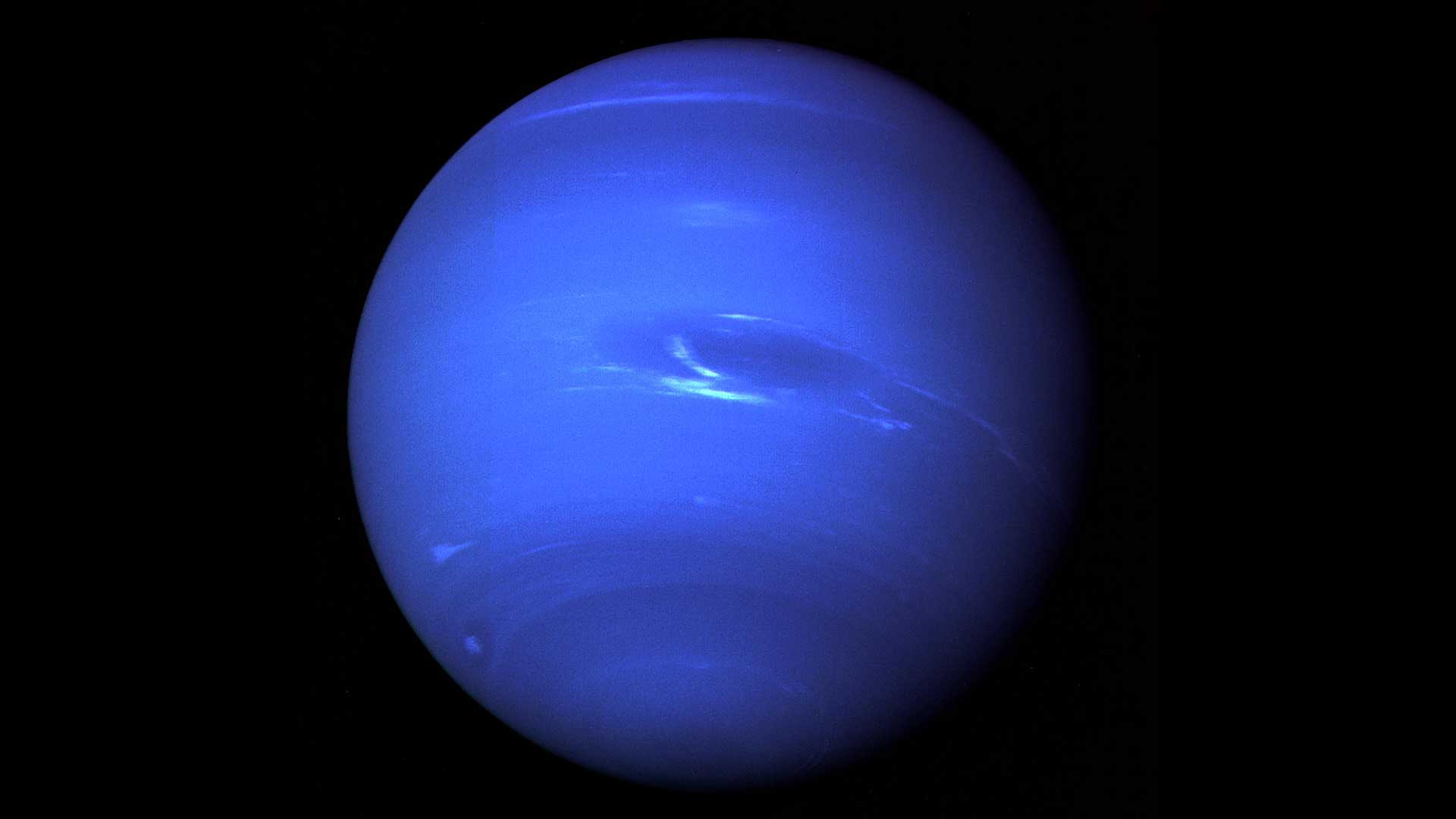
Neptune reaches opposition around September 26, meaning Earth lies roughly between the planet and the Sun. The outer planet is up for much of the night and relatively close to Earth by orbital standards. It is still not a naked-eye object.
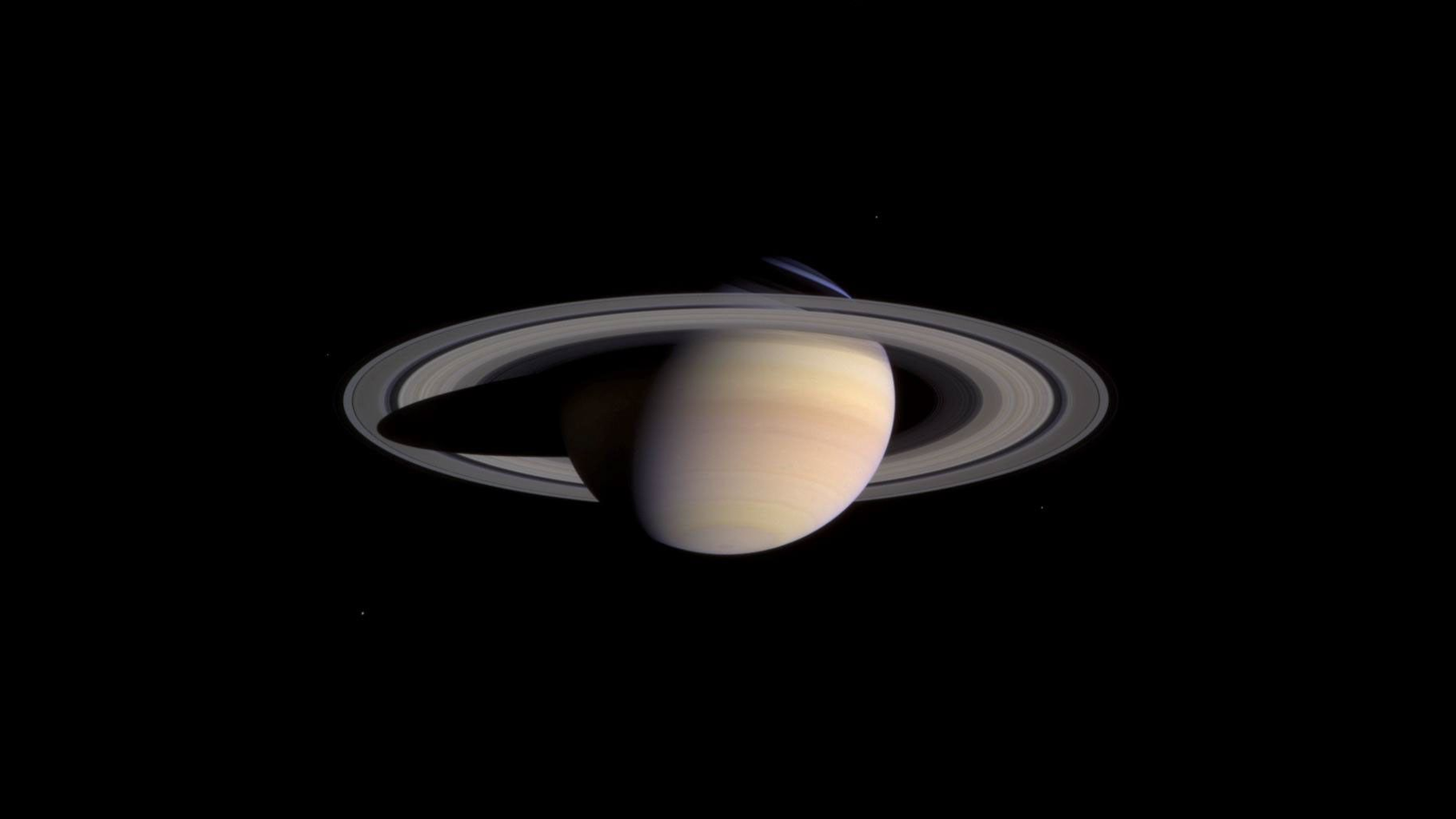
Binoculars may show Neptune as a star-like point under good conditions, while a telescope and accurate chart are more useful for identification. Do not expect the richly detailed blue disk seen in spacecraft images. The visual reward is locating a distant planet, not seeing weather systems.
The Harvest Moon also falls around September 26, although some calendars list September 27 depending on time zone and naming convention. The name refers to the full Moon nearest the autumn equinox. Around this period, moonrise occurs at a similar time on successive evenings, historically extending usable evening light during harvest.
For photographs, an open eastern horizon is more important than a long lens. The Moon appears especially impressive near buildings, hills or trees because of the Moon illusion, not because its physical size suddenly increases.
What about a September lunar eclipse?
Some 2026 calendars list a total lunar eclipse on September 7. Whether it is visible from a particular city depends on whether the Moon is above the horizon during the eclipse phases. Check a location-specific eclipse map before treating it as a local event.
This article emphasizes events with clear September observing guidance from the monthly sources. The safest planning method is to cross-check dates because published calendars can use Universal Time, British Summer Time or a local civil date. An event at 01:00 UT can appear on the previous evening in North America.
The same caution applies to weather. A correct astronomical time cannot guarantee a clear sky. Use a short-range cloud forecast on the day and identify a safe site before driving at night.
A simple equipment plan
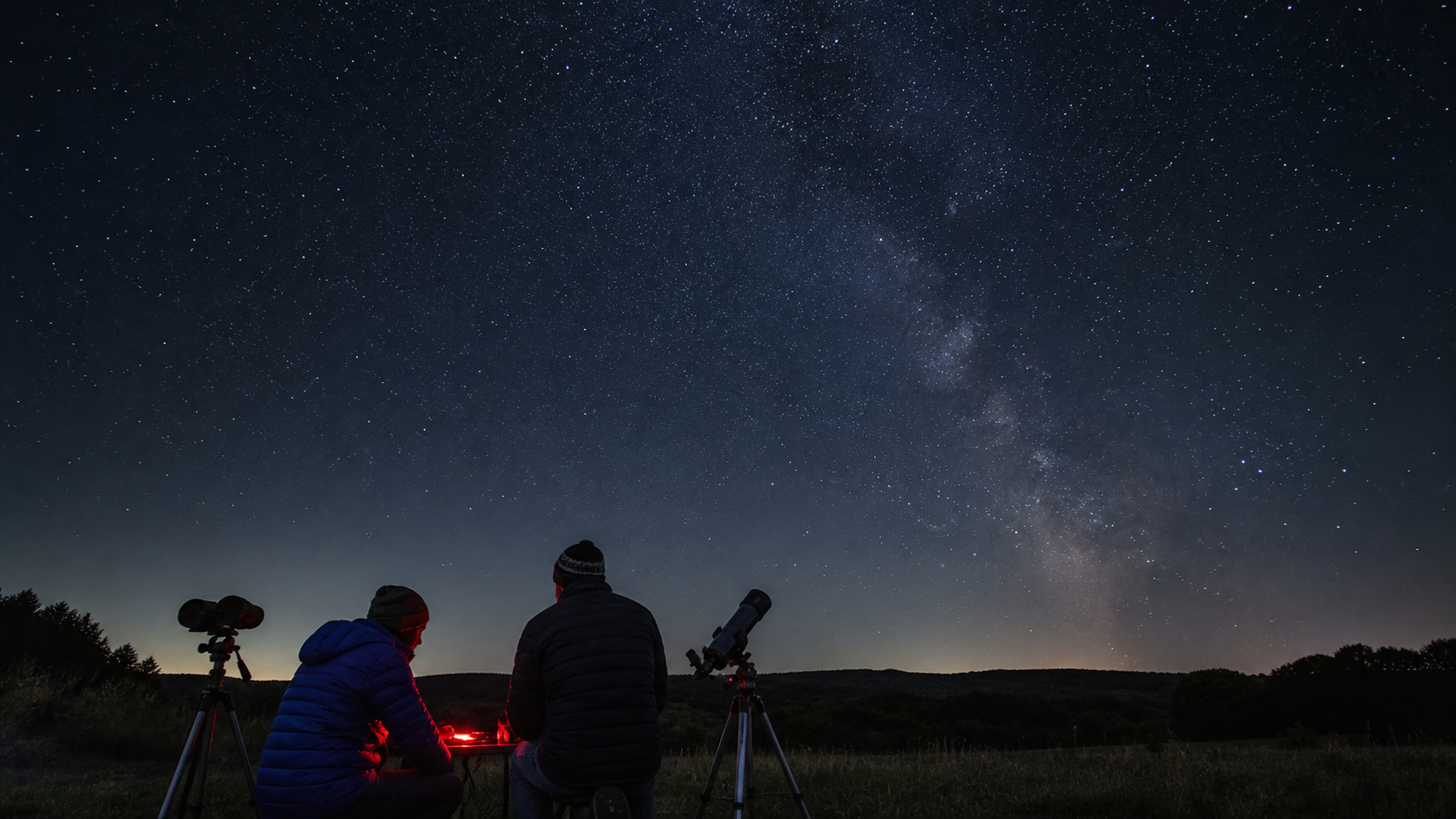
For Venus, Spica, the Harvest Moon and the broad Moon-star alignment around September 20, your eyes are enough. Binoculars improve low-contrast scenes and can help with close approaches. A small telescope becomes useful for Venus’s phase and Neptune.
Bring a stable chair, warm layer, red flashlight and a backup plan for clouds. Avoid private property and roadside shoulders. Tell someone where you are going if observing alone.
For a phone photograph, use a tripod or brace the device. Reduce exposure for Venus and the Moon. Night mode can help with constellations but may smear stars if the exposure is long.
Our Google Trends guide offers a parallel lesson: a dramatic chart or photo is easier to understand when the viewer knows the scale and boundary. Astronomy is full of real wonders that do not need exaggerated size or invented color.
What happens next
October brings the Draconid and Orionid meteor-shower peaks, but September’s strength is variety. Two bright-planet occultations, an equinox, bright Venus, Neptune opposition and the Harvest Moon offer several levels of difficulty.
Choose one event that fits your location and equipment. Verify the local time, find the horizon in daylight and then let the sky do the work. The best September plan is not to chase every date; it is to be correctly placed for the one you can actually see.
Quick poll
Which September sky event would you most like to see?
Visibility for occultations and eclipses is location-specific; use a city-level chart before observing.
FAQ
When is the Jupiter occultation? September 8, 2026, with visibility across parts of North America, Greenland, eastern Russia and the North Pacific.
Can I see Neptune without a telescope? No. Neptune is too faint for unaided viewing; binoculars or a telescope plus an accurate chart are needed.
When is the Harvest Moon? It falls around September 26-27 depending on time zone and calendar convention.
Is Venus safe to view with binoculars after sunset? Yes after the Sun is fully below the horizon. Never point binoculars or a telescope near the Sun.