Key Takeaways
- The 2026–27 pass is for US fourth-grade students and their home-school equivalents, and expires August 31, 2027.
- At per-person sites, it covers all children under 16 and up to three adults; at vehicle-fee sites, it covers one passenger vehicle.
- A photo of the paper voucher is not an accepted substitute. An official Recreation.gov digital pass is a separate option.
- Camping, special tours, some parking, and required reservations remain separate considerations.
US fourth graders can now get the Every Kid Outdoors pass for the 2026–27 school year, giving them and qualifying companions free entrance to participating federal lands and waters through August 31, 2027. The useful detail for families is that the benefit depends on how a site charges admission—and it does not eliminate reservations or every extra fee.
The new school-year window began September 1. This is a pass to obtain and bring with the eligible child, not an automatic discount applied because a parent mentions having a fourth grader at home.
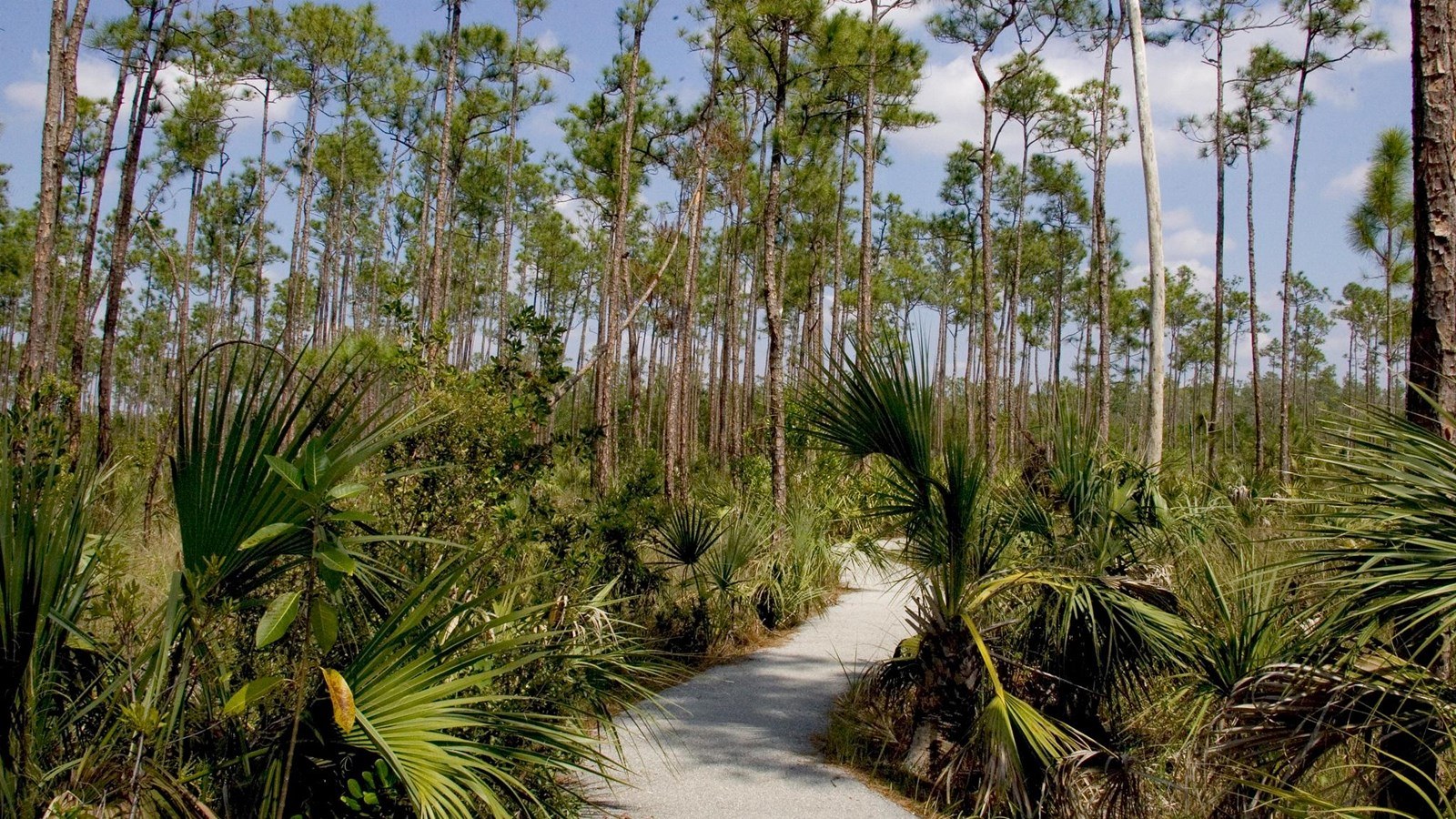
Hero: National Park Service photograph of Pinelands Trail in Everglades National Park. Source · Public-domain policy. Resized and JPEG-optimized. No claim to original US Government works.
Begin with the current school-year rules
The program’s official rules explicitly identify the 2026–27 school year and an August 31, 2027 expiration. That makes the pass useful throughout fourth grade and the following summer, rather than for twelve months counted from whichever day you apply.
The eligibility description includes US fourth-grade students and the home-school equivalent. It does not extend the program to every elementary-school grade. An older sibling’s eligibility last year does not create a transferable family pass this year.
Each student’s pass has its own code. The program says students cannot transfer a pass to someone else or copy it for friends. Eligible friends need their own passes. Educators can obtain one paper pass for each of their fourth-grade students through the educator route.
The eligible child also needs to be part of the visit. The NPS program brochure makes the student’s presence explicit. We use that brochure for this participation rule; the current program rules supply the 2026–27 dates. Think of the adults as accompanying the passholder, rather than treating the child’s pass as a free-standing adult annual pass.
Paper and digital are two different routes
NPS directs students to complete a short educational activity on Every Kid Outdoors and print the resulting paper voucher. Bring the printed voucher when you visit. The program’s instructions say an electronic copy of that paper is not accepted.
That warning can sound confusing because NPS now also links to an official digital fourth-grade pass. The distinction is between an image of a paper voucher and an issued digital pass. The program’s current rules direct children who want the digital version to work with a grown-up through Recreation.gov.
Start from the official NPS or Every Kid Outdoors link to choose that route. Do not assume that saving a photograph, PDF preview, or screenshot of the paper process creates a valid digital credential. Follow the requirements shown by the official digital-pass service.
Paper vouchers can be exchanged for plastic passes at certain participating locations. You do not need to assume that every park office stocks them. Check the location’s instructions before making an extra trip specifically to exchange a voucher.
If a paper pass is lost, the program says to return to the website and obtain a new one. It also says there are no refunds for previously purchased passes or for admission paid because you forgot your pass. Preparing the credential before leaving home is therefore more useful than planning to ask for reimbursement afterward.
Count companions using the site’s admission system
The same pass works differently at different entrance stations because the fee being waived may be assessed per person or per vehicle. The official rules give these three cases:
| How the group arrives or pays | Coverage described by the program |
|---|---|
| A site charging per person | All children under 16 and up to three accompanying adults |
| A site charging per vehicle | Children and adults in one passenger vehicle; commercial vehicles excluded |
| A group arriving by bicycle | All children under 16 and up to three accompanying adults on bicycles |
For example, four adults accompanying an eligible student at a per-person entrance should not read “family access” as four free adult admissions. The stated allowance is up to three adults. At a vehicle-fee entrance, the unit is one passenger vehicle, not an unlimited number of cars traveling together.
Before dividing a group between cars or choosing an entrance, check that particular site’s fee page. The pass supplies the benefit; the site determines which fee structure applies. This small check can prevent a surprising bill at the gate.
What the free pass does not pay for
The program’s rules exclude charges such as parking, camping, boats, and special tours. Some sites operated by private concessioners may not honor the pass, and local, city, and state parks are not covered unless they explicitly accept it.
That does not make the pass a poor benefit. It defines the portion of the trip it pays for. A family can have entrance covered while still paying for a campsite, a boat service, or a booked activity. Budget those separately instead of translating “free access” into “every part of the visit is free.”
NPS’s entrance-pass guidance also explains that certain high-traffic parks use timed entry or reservations for particular places and tours. A pass does not create a reservation or guarantee space at a sold-out activity.
The best planning order is to check the destination and any required reservation, then confirm pass acceptance and remaining fees. Buying or obtaining an entrance credential before checking access availability can solve the wrong problem.
A yearlong pass is different from a fee-free day
NPS lists September 17, Constitution Day, among its 2026 entrance-fee-free dates. The agency specifies that the 2026 fee-free days apply to US citizens and residents; other charges, including reservation fees, may remain.
Those calendar dates and Every Kid Outdoors are separate ways to qualify for entrance benefits. A fourth grader’s pass is useful outside a fee-free day, while an adult without an eligible student can investigate the applicable fee-free dates. Neither automatically waives the other costs of a trip.
Our Labor Day planning guide covers another kind of calendar question: what is open and closed around a holiday. A federal holiday alone should not be treated as proof that a particular park entrance is free; use the park service’s actual fee-free list.
What happens next
Choose the paper or official digital route with the fourth grader, keep the valid pass ready, and pick a specific participating destination. Then check the destination’s current notices, entrance-fee structure, reservation requirements, and any activity fees before setting out.
For an inexpensive first outing, remember that NPS says most of its sites are already free to visit. The aim does not have to be an elaborate trip to maximize a dollar value. The pass adds options where federal entrance or day-use charges apply.
If you are pairing an outdoor visit with an evening activity, our September night-sky guide can help identify what to research. Park access hours and overnight restrictions still come from the destination itself.
Quick poll
What would you check first for a family park visit?
Our take: confirm access and reservations before treating free entrance as a complete trip plan.
FAQ
When does the 2026–27 pass expire?
August 31, 2027. Its validity follows the school-year program window rather than twelve months from application.
Can I show a photo of the paper voucher?
No. The program does not accept electronic copies of paper vouchers. An official digital pass issued through Recreation.gov is a separate option.
Does the fourth grader have to come?
Yes. The accompanying adults receive access with the eligible student; the pass cannot be transferred to another person.
Are camping and reservations free too?
No. The program excludes several activity fees, and a required reservation remains a separate requirement. Check the destination’s official fee and access pages.