Key Takeaways
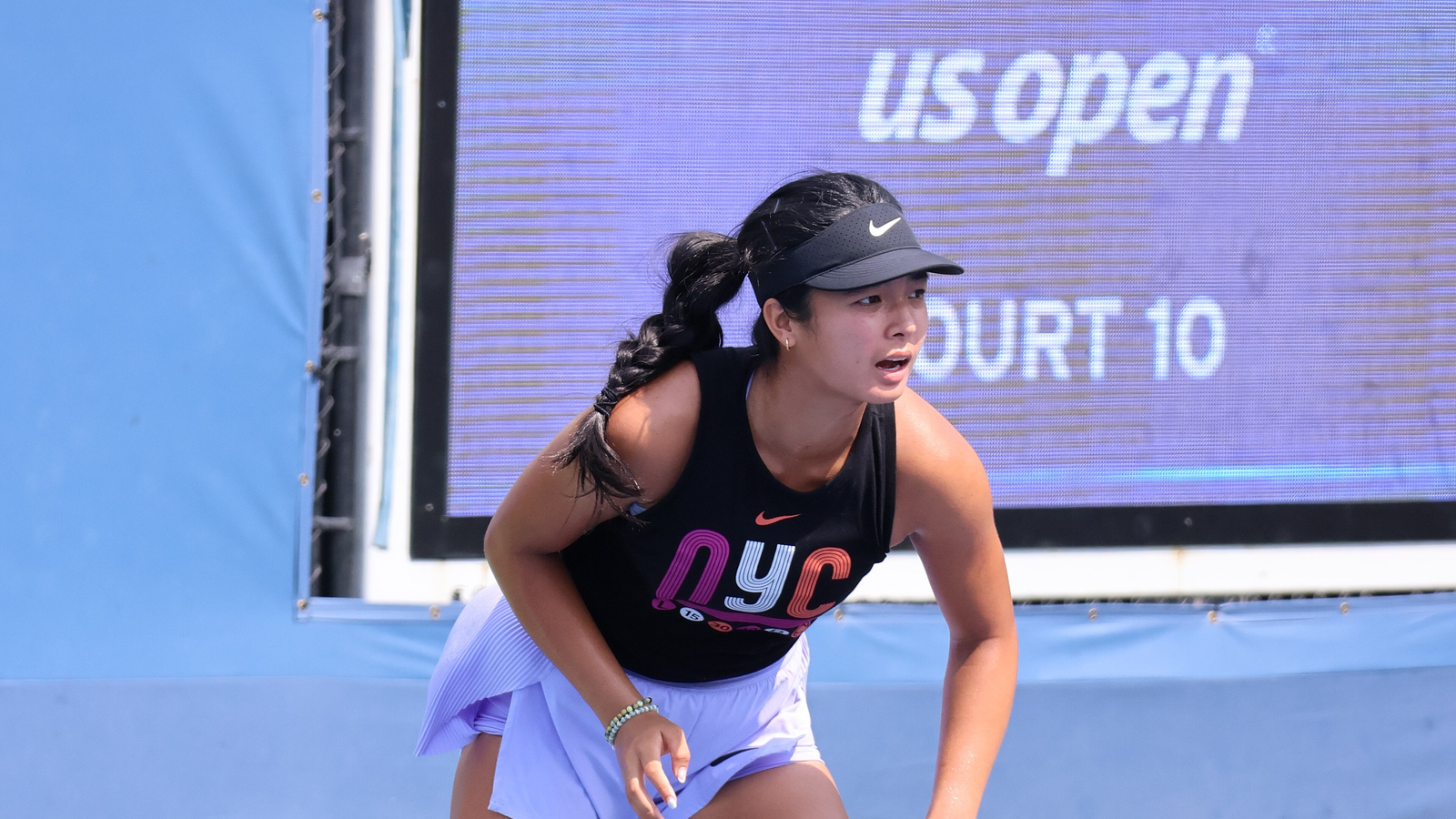
- Swiatek beat Wang Xiyu 6-2, 6-3 in 1 hour and 28 minutes.
- She has won 28 consecutive Grand Slam opening matches and is 30-1 overall in major first rounds.
- Twenty-eight of those 30 first-round wins came in straight sets.
- Her next-round prospects depend on sustaining the same intensity, not merely protecting the streak.

Iga Swiatek opened the 2026 US Open with a 6-2, 6-3 win over Wang Xiyu, extending one of the quietest durable streaks in tennis. She has now won 28 consecutive first-round matches at Grand Slam tournaments. Her only opening-round loss at a major came against Viktorija Golubic at Wimbledon in 2019.
The number looks like proof that first rounds are routine for an elite player. Swiatek described the opposite mindset after the match. She said she does not treat them as matches that should be easy and does not take them for granted. That answer is the most useful explanation of the streak: a champion approaches the first day as a competitive problem, not an administrative step.
What happened against Wang
Swiatek established the match with her backhand. WTA’s account says that wing produced the early break and helped her control the first set. Wang’s forehand kept her competitive, including a game in which she saved three break points, but Swiatek took the set 6-2 without letting the resistance change the match’s direction.
The second set was tighter than the score might suggest. The players traded holds through the first seven games. Swiatek then placed a forehand into the corner to get the decisive break and served out the match. There was no collapse, injury scare, or prolonged argument with the conditions. It was the kind of clean opening that preserves energy for the later rounds.
The head-to-head also mattered. Swiatek now leads Wang 3-0, with all three wins in straight sets. Familiarity does not guarantee a result, but it reduces uncertainty. Swiatek knew which exchanges she wanted and did not need to invent a plan after the first few games.
The result belongs in the larger US Open 2026 preview, where the women’s draw was unusually open. Defending champion Aryna Sabalenka began her own campaign with a straight-sets win, while Swiatek entered New York with renewed confidence after winning in Toronto.
Why 28 openers are harder than they look
A seeded player usually avoids another top seed in the first round, but that is not the same as receiving 28 harmless opponents. Major draws include dangerous unseeded veterans, returning players, qualifiers carrying match rhythm, and younger opponents with little to lose. Conditions also change across Melbourne, Paris, London, and New York.
The first round brings a distinct kind of pressure. A player has practiced at the site but has not yet felt the tournament court in a live singles match. Timing can be slightly wrong. A new ball, court speed, wind pattern, or schedule can turn one service game into a long opening set. The favorite also faces an asymmetric consequence: the underdog can play freely, while one bad hour ends the favorite’s event.
Swiatek’s record across those conditions is 30-1. WTA says 28 of the wins were in straight sets. That is not only evidence of survival. It shows how often she prevented an opener from becoming a three-set physical cost.
The streak began after the 2019 Wimbledon loss, when Swiatek was still establishing herself at tour level. Since then, her game, ranking, and expectations have changed dramatically. The constant has been her ability to arrive at a major ready to apply match intensity immediately.
The Toronto title changed the context
Swiatek did not enter the summer with an ordinary version of her résumé. She had gone nearly a year without a title and had slipped in the rankings by her standards. That made the Toronto run important beyond the trophy. She beat Elena Rybakina 6-2, 6-3 in the final, earned her first title of 2026, and restored evidence that her hard-court patterns could hold against an elite opponent.
The US Open opener did not prove she will win in New York. It showed that the Toronto confidence survived the change of tournament. Her backhand established control, she handled a close stretch in the second set, and she closed without requiring extra time on court.
Yahoo Sports framed the women’s tournament around a battle for the No. 1 ranking and a draw without one obvious inevitability. Sabalenka entered as the two-time defending champion, but several challengers arrived with credible form. Swiatek’s opening streak gives her a stable floor; it does not supply the ceiling required to win seven matches.
This distinction is the same one readers should make when interpreting any search spike. Our guide to reading Google Trends explains why attention tells you what people are asking, while match records establish what actually happened.
What the streak says about preparation
Swiatek’s post-match comment is useful because it rejects the assumption that superior ranking removes risk. Treating the first round seriously means scouting an opponent’s patterns, preparing for the court, and accepting that early discomfort does not signal disaster.
Her style supports that approach. Heavy groundstrokes can establish depth before the fine margins of shot-making fully settle. The return game creates chances even when serving rhythm is imperfect. Once she gets ahead, court position and pace make it difficult for an opponent to play freely.
The mental part is less visible. A favorite must be willing to win an ordinary point repeatedly rather than chase the spectacular shot expected from a star. Against Wang, the decisive second-set break came after seven consecutive holds. Swiatek waited for the correct opening instead of turning a competitive set into an emergency.
That patience also protects energy. Grand Slam success is cumulative. A 1-hour-28-minute opener creates a better recovery window than a three-hour escape, even though both count as one win in the draw.
What happens next
The streak will appear in broadcasts whenever Swiatek begins another major, but it should not become the goal. Protecting a first-round statistic cannot help her in the second week. The practical objective is to keep reproducing the behaviors behind it: early intensity, clear patterns, patience through a close stretch, and efficient closing.
The next opponent will present a different set of exchanges, and later rounds will bring players with greater ability to absorb her pace or attack her second serve. The 6-2, 6-3 result is therefore a checkpoint, not a forecast.
Swiatek has already demonstrated that she can win this tournament and other majors. What the 28-match opening streak adds is evidence of reliability across seven years of changing form, surfaces, and expectations. She does not need to make the first round look dramatic. The achievement is how rarely she allows it to become dramatic at all.
Quick poll
What matters most in a major-tournament opener?
Swiatek has won 28 straight major openers, with 28 of her 30 career first-round wins coming in straight sets.
FAQ
How many Grand Slam first rounds has Iga Swiatek won in a row? She has won 28 consecutive opening matches at majors after beating Wang Xiyu at the 2026 US Open.
What was the score against Wang Xiyu? Swiatek won 6-2, 6-3 in 1 hour and 28 minutes.
When did Swiatek last lose in the first round of a major? Her only such loss came against Viktorija Golubic at Wimbledon in 2019.
Does the streak make Swiatek the US Open favorite? It confirms unusual first-round reliability. Tournament favoritism also depends on current form, the draw, and performance against later-round opponents.