Key Takeaways
- Authentic Brands Group now owns 51% of OVO's IP; Drake keeps 44% and creative control, Vince Holding Corp. holds 5%.
- Vince Holding runs operations: three new U.S. stores next year and wholesale to major retailers starting 2027.
- OVO's Toronto creative team stays intact; the deal targets a streetwear market projected near $500 billion by 2028.
- Vince Holding projects roughly $81 million in quarterly sales, with results due by September 15.
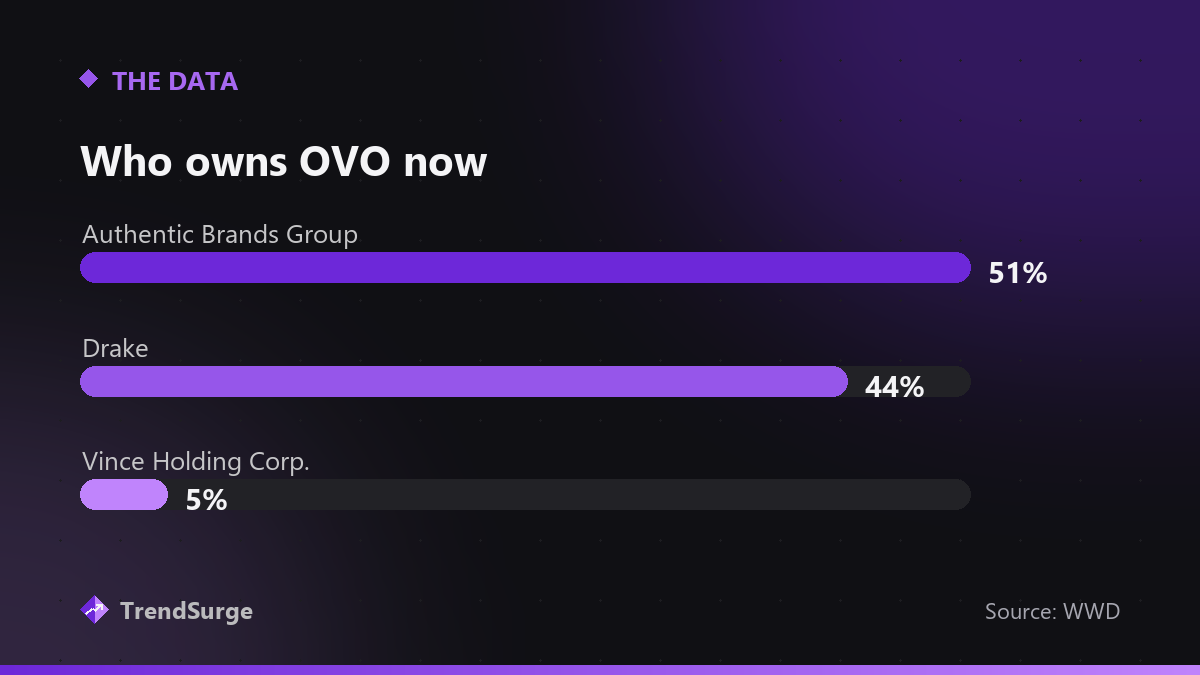
Drake no longer controls the majority of OVO. Authentic Brands Group — the licensing giant behind Reebok, Champion, Sports Illustrated, and the estates of Elvis Presley and Muhammad Ali — announced on August 27 that it has acquired a 51 percent stake in the intellectual property of October’s Very Own, the lifestyle brand Drake co-founded in 2008. According to WWD, Drake keeps 44 percent ownership and stays on as the brand’s creative force, while Vince Holding Corp. takes the remaining 5 percent and will run OVO’s day-to-day apparel and retail business. If you’re wondering whether the owl is about to show up in every mall in America: that is, quite literally, the plan.
The deal, in plain terms
Authentic Brands Group is a brand and entertainment platform that buys the intellectual property of famous names and labels, then licenses them to operators who handle the actual making and selling. The Hollywood Reporter notes that Authentic has become the second-largest licensor in the United States, behind only The Walt Disney Company, through deals with celebrities like Kevin Hart, Shaquille O’Neal, and David Beckham and acquisitions of brands like Brooks Brothers and the Care Bears.
That’s the machine OVO just plugged into. Per WWD, the ownership now breaks down as 51 percent Authentic, 44 percent Drake, and 5 percent Vince Holding Corp. — the Nasdaq-listed company best known for the Vince luxury apparel brand. As part of the transaction, Vince Holding becomes OVO’s core apparel and retail licensee, overseeing design, product development, and merchandising globally, and it acquired the operating business behind OVO’s retail stores.
Drake’s own framing was characteristically sentimental. “We’re just a couple kids from Toronto who started something we believed in. Here we are 20 years later, same kids with bigger dreams. Authentic and Vince are the perfect partners to help us continue to grow,” he said in the announcement.
What OVO actually is — and why Authentic wanted it
October’s Very Own started in 2008 as a blog and lifestyle movement founded by Drake alongside entrepreneur Oliver El-Khatib and producer Noah “40” Shebib, according to Billboard. It grew into a streetwear label defined by a black-and-gold palette and an owl logo — a nod to Drake’s night-owl lifestyle, per WWD, with the name itself referencing his October birth month. The OVO Sound record label spun off from the same brand universe.
Today the operation is bigger than most artist merch lines ever get. WWD reports OVO operates eight stores in Canada, three in the U.S., and one in London, and the brand’s own materials describe twelve flagship stores plus a global e-commerce business, now led by CEO Drex Jancar. It has a golf collection, a UFC collaboration, and past partnerships spanning MLB, New Era, and the NBA — including, as Billboard points out, the instantly iconic capsule celebrating the Toronto Raptors’ 2019 championship.
“Few brands combine influence, elevated style and approachability the way OVO does,” Vince Holding CEO Brendan Hoffman told WWD. Authentic founder and executive chairman Jamie Salter was more direct about the thesis: “Drake has built a true lifestyle brand with influence across fashion, music, art and culture, but it’s unmistakably OVO. That’s exactly the kind of brand we at Authentic know how to grow.”
The expansion plan: three U.S. stores, then the big-box push
This is where the deal stops being abstract. Hoffman laid out concrete plans to WWD: Vince Holding intends to open three OVO stores in the United States next year, and to begin wholesaling the brand — meaning OVO product on the shelves of major retailers — starting in 2027.
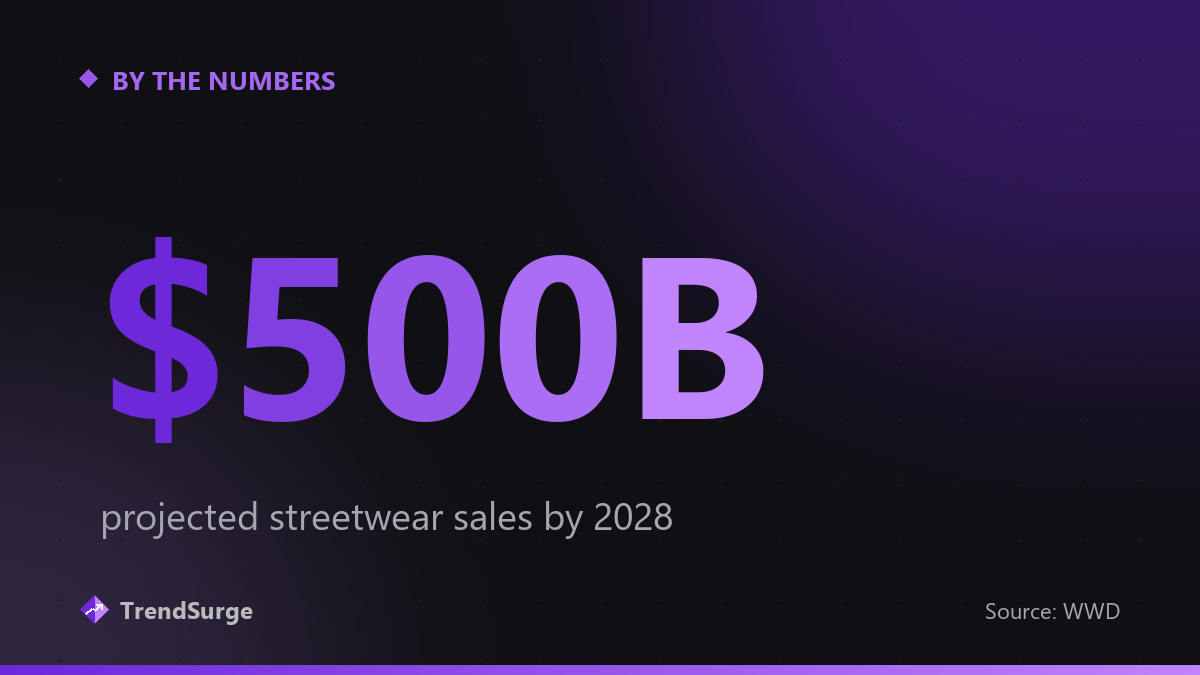
That would be a genuine shift. OVO has historically run a tight, drop-driven retail model through its own flagships and website. Wholesale distribution through big retail partners is how brands like Champion (another Authentic property) reached mass scale. Hoffman told WWD the streetwear category OVO gives them access to is expected to account for nearly $500 billion in sales by 2028 — a market Vince Holding currently has no position in. “We’ve already explored different markets in the U.S.,” he said. “It’s nice to have a blank canvas.”
There’s a Canada angle, too: Hoffman said the deal also gives the Vince brand access to the Canadian market, where the company may open Vince stores and enter wholesale.
Will OVO still feel like OVO?
This is the question every fan asks when a culture brand sells to a licensing platform, and everyone involved is working hard to answer it preemptively. According to WWD, OVO will be run as a separate division, and the existing Toronto-based creative and design teams stay intact — Vince Holding handles production and back-of-house functions.
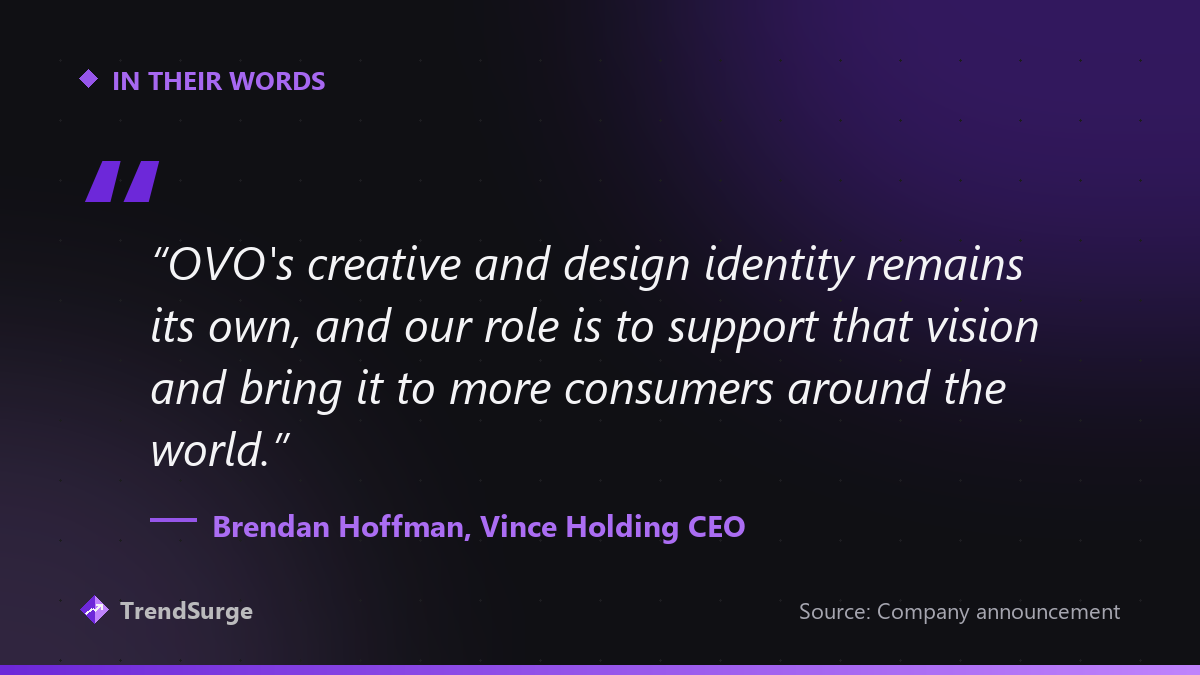
“OVO’s creative and design identity remains its own, and our role is to support that vision and bring it to more consumers around the world,” Hoffman said in the announcement. Salter, for his part, insisted that “iconic brands don’t need to choose between staying culturally relevant and scaling globally.”
The skeptic’s case writes itself: Authentic’s playbook is scale, and scale has a way of sanding the edges off brands built on scarcity. The optimist’s case is that OVO keeps its Toronto creative core while someone else finally handles the unglamorous work of global logistics. Which version plays out won’t be clear until the product hits wider shelves.
The money behind the move
For Vince Holding, this is a bet with immediate financial context. WWD reports that a portion of the OVO sale proceeds will strengthen the brand’s balance sheet and support Vince Holding’s growth plan. The company also updated its outlook alongside the announcement: it now projects roughly $81 million in net sales for the quarter ended August 1 — the high end of prior guidance — with full results due by September 15.
Vince and Authentic already know each other well. In 2023, Authentic acquired the Vince brand’s intellectual property through a subsidiary, ABG Vince, in which Authentic owns 75 percent and Vince Holding owns 25 percent, per WWD. The OVO deal repeats that structure with a new brand — and Authentic’s Salter told WWD he sees it as “just the beginning of a much larger business relationship” with Drake, adding, “We look forward to pursuing many more deals together.”
Authentic’s scale is the reason those words carry weight: the company says its portfolio of more than 50 brands drives over $38 billion in annual systemwide retail sales through a network of 1,700-plus licensees across 150 countries.
What happens next
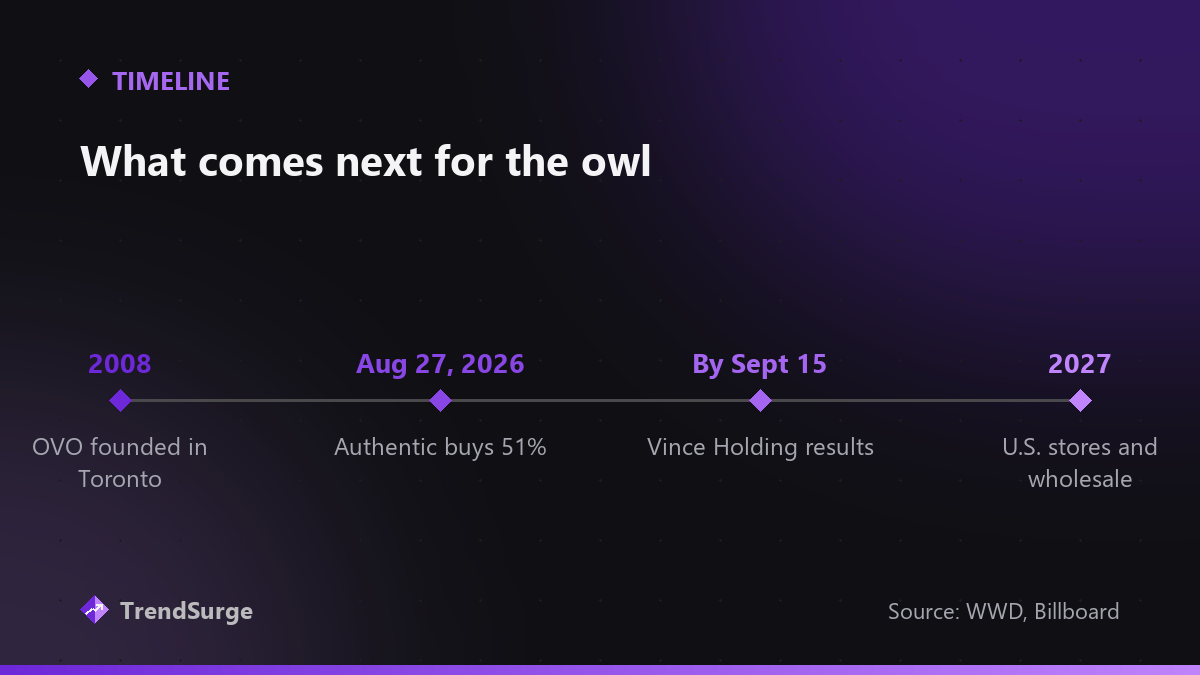
The near-term calendar looks like this: Vince Holding reports quarterly results by September 15, which should bring more detail on deal economics. The first new U.S. OVO stores are slated for 2027 under the “next year” timeline Hoffman gave WWD, with wholesale distribution to major retailers beginning in 2027. Expect collaboration announcements before then — Salter explicitly flagged “content, experiences and global commerce, including the kinds of collaborations that introduce OVO to new audiences.”
The bigger thing to watch is Drake himself. Authentic’s model works best when the celebrity stays engaged — Hoffman told WWD he had dinner with Drake the week before the announcement and found him “awfully enthusiastic and ready to lean in. Obviously he has a day job.” (That day job is doing fine — Drake’s “Janice STFU” is nominated for Best Hip-Hop at September’s VMAs.) Whether the owl becomes the next Champion or stays a Toronto cult object depends largely on how much of that enthusiasm survives contact with mass retail.
More celebrity-business stories: the Wondermind investor lawsuit against Selena Gomez
Quick poll
Does OVO survive going mainstream?
Worth knowing: WWD reports OVO will run as a separate division with its Toronto creative and design teams intact, while Vince Holding handles production.
FAQ
Did Drake sell OVO completely? No. Authentic Brands Group acquired a 51 percent majority stake in OVO’s intellectual property, but WWD reports Drake retains 44 percent ownership and continues to shape the brand’s creative vision. Vince Holding Corp. owns the remaining 5 percent.
Who is Authentic Brands Group? A New York-based brand and entertainment platform that owns the IP of more than 50 brands — including Reebok, Champion, Sports Illustrated, and the estates of Elvis Presley and Marilyn Monroe — and licenses them to operating partners. The Hollywood Reporter calls it the second-largest licensor in the U.S. after Disney.
Will OVO open more stores? Yes, according to WWD: Vince Holding plans three new U.S. stores next year, and OVO product is expected to reach major retail chains through wholesale starting in 2027.
Will OVO’s design and quality change? The companies say no — OVO runs as a separate division with its Toronto creative and design teams intact, while Vince Holding takes over production and back-office operations. Whether the feel of the brand survives mass expansion is the open question.